Al-Mustaqbal University Activates Its Academic Partnership with the University of Technology to Support Innovation and Energy Research
ايمان محمد مهدي
26-08-2026
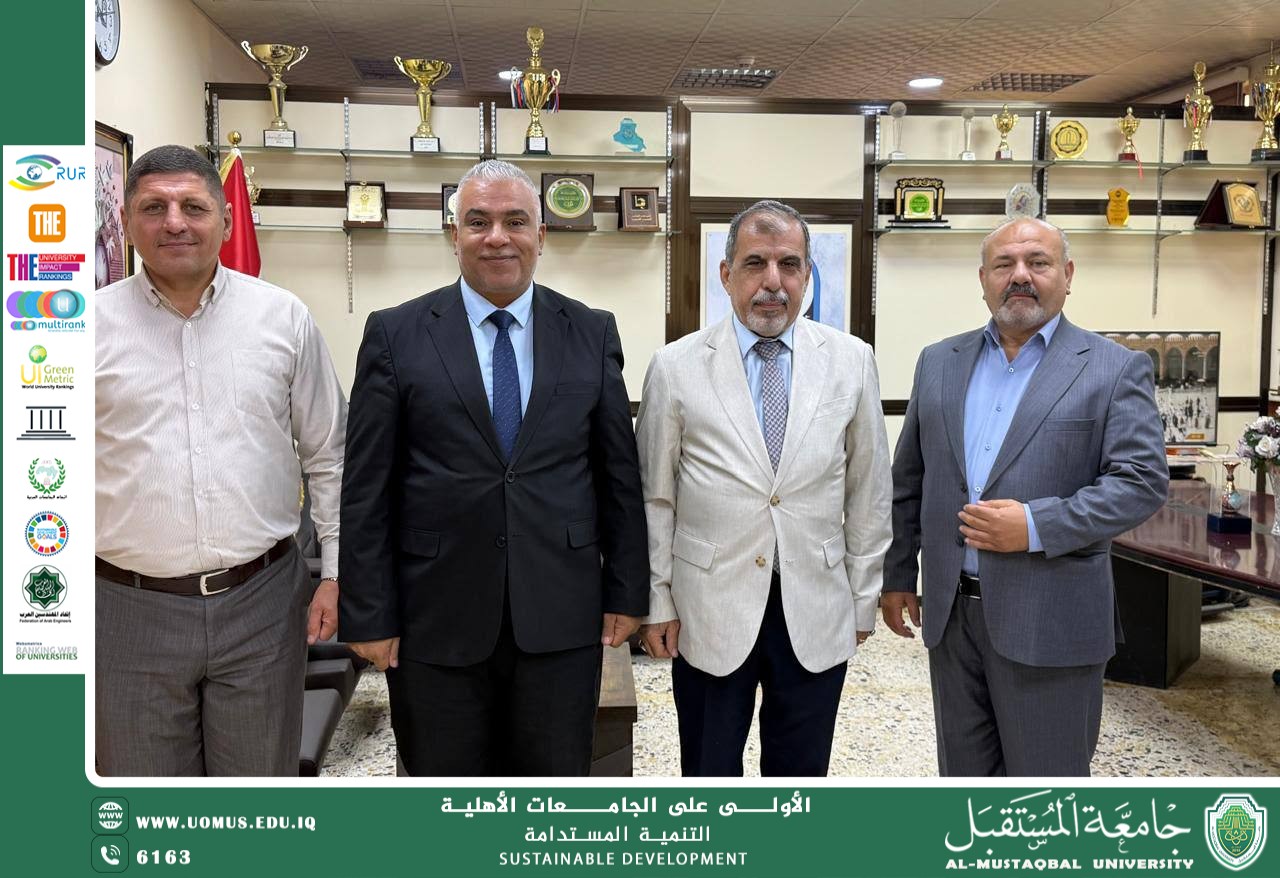


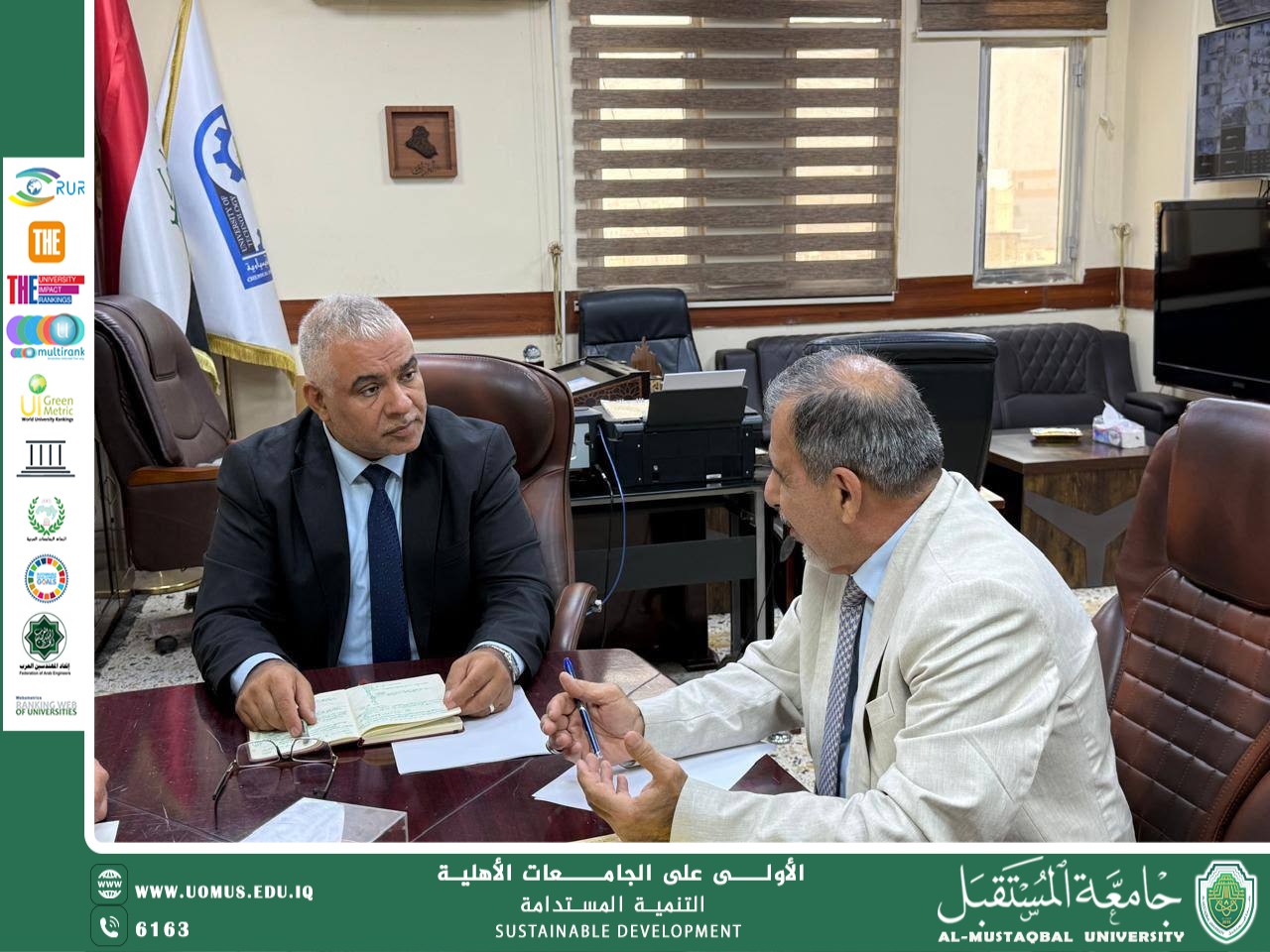
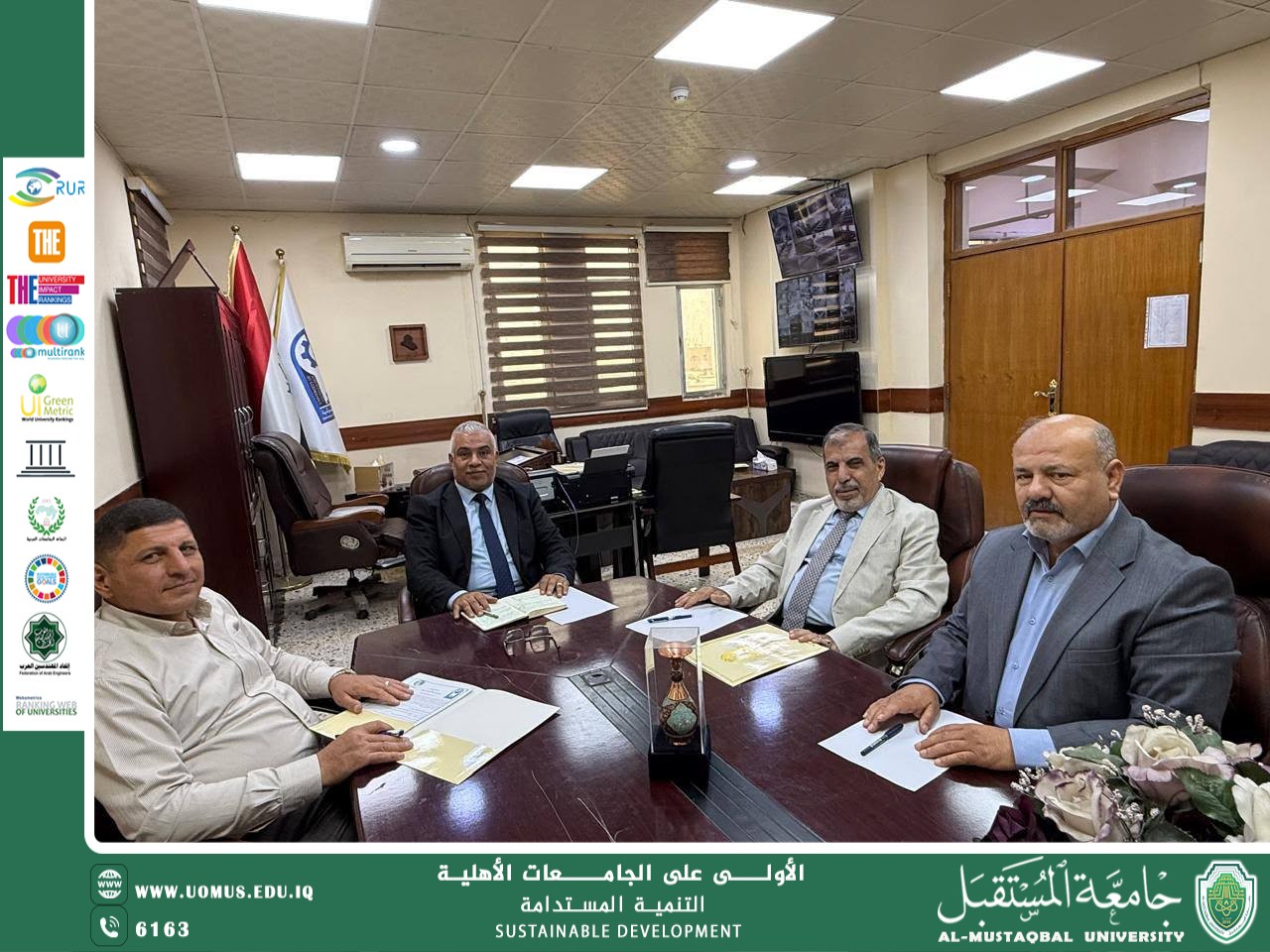
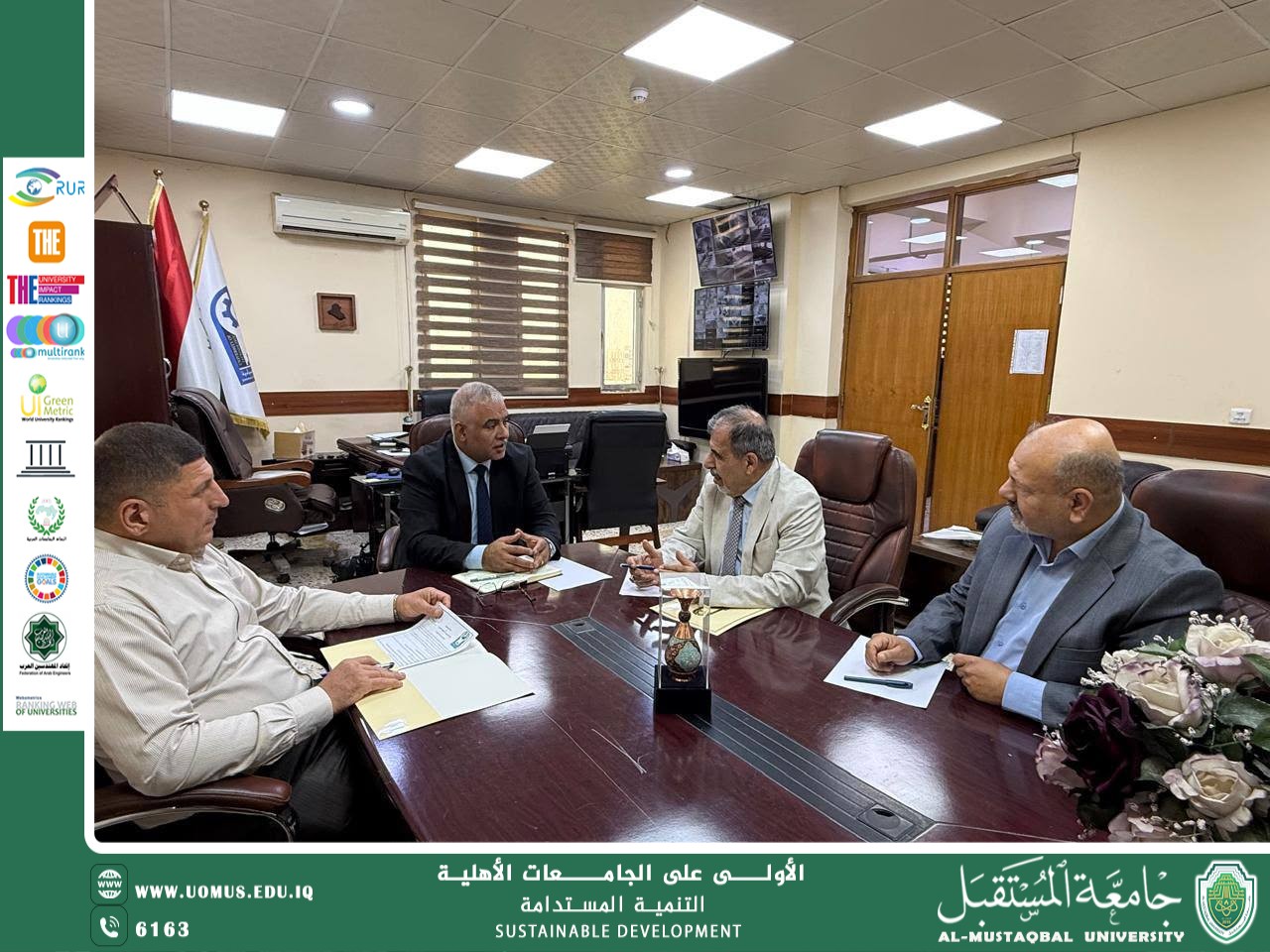
As part of Al-Mustaqbal University’s commitment to expanding its academic and research partnerships and strengthening scientific cooperation among higher education institutions, and in implementation of the twinning agreement with the College of Chemical Engineering at the University of Technology, Professor Dr. Alaa Dhari Jawad, Head of the Department of Chemical Engineering and Petroleum Industries at the College of Engineering, Al-Mustaqbal University, paid an official academic visit to the College on Sunday, 23 August 2026.
He was received by Professor Dr. Khalid Ajmi Sukkar, Dean of the College of Chemical Engineering; Professor Dr. Zaidoun Mohsen Shakoor, Head of the Department of Petroleum Refining and Gas Technology; and Lecturer Dr. Fadhil Hashim, a faculty member at the College.
The visit aimed to discuss mechanisms for enhancing Al-Mustaqbal University’s active participation in the Fourth International Conference on Modern Technologies for the Oil and Gas Industry, scheduled to be held on 22–23 September 2026. Discussions also addressed the scientific and organizational preparations for the conference, including a review of the research papers submitted by researchers and the latest arrangements aimed at ensuring the successful implementation of the conference activities.
The discussions also covered the development of the curricula planned for the upcoming academic year, with a focus on aligning them with the latest scientific and technological developments in the fields of energy, chemical engineering, and petroleum industries, while responding to labour market requirements and the evolving needs of the industrial sector.
As part of the visit, Professor Dr. Alaa Dhari also toured the educational and research laboratories at the College of Chemical Engineering and reviewed the latest equipment and technologies used in practical training and scientific research. The visit provided an opportunity to explore avenues for exchanging expertise and benefiting from advanced academic and laboratory practices in developing the educational and training environment for students.
The College of Engineering at Al-Mustaqbal University, which includes the Department of Chemical Engineering and Petroleum Industries, plays an important role in preparing engineering graduates equipped with the scientific and practical competencies required to innovate and respond to local and regional labour market needs. Since its establishment in 2016, the College has worked to advance its academic programmes and strengthen practical education through modern curricula, specialized laboratories, field training, and research projects.
The visit forms part of the University’s commitment to promoting research- and innovation-based education and connecting academic knowledge with industrial applications, thereby contributing to the preparation of engineers equipped with the scientific and practical competencies required to support the development of the energy, petroleum, and petrochemical sectors.
This initiative aligns with the United Nations Sustainable Development Goals (SDGs), particularly SDG 4: Quality Education, through curriculum development, practical training, and scientific research; SDG 9: Industry, Innovation and Infrastructure, by supporting research and development, modern technologies, and stronger links between engineering education and industrial needs; and SDG 7: Affordable and Clean Energy, by supporting research and development in energy-related fields and modern technologies.
The initiative also contributes to SDG 8: Decent Work and Economic Growth, by aligning engineering education outcomes with labour market requirements and developing students’ professional competencies, as well as SDG 17: Partnerships for the Goals, through strengthening academic partnerships, activating twinning agreements, and facilitating the exchange of expertise and research in support of scientific, economic, and community development.
At the conclusion of the meeting, both sides emphasized the importance of maintaining joint coordination, expanding areas of cooperation, and strengthening the exchange of scientific and research expertise. Such efforts contribute to advancing the educational process, developing students’ skills, enhancing researchers’ capabilities, and strengthening the role of academic institutions in serving the community and responding to its developmental needs.