Partnerships for Sustainability: Al-Mustaqbal University Transforms Development Challenges in Babylon into Innovative Research Solutions
ايمان محمد مهدي
10-06-2026


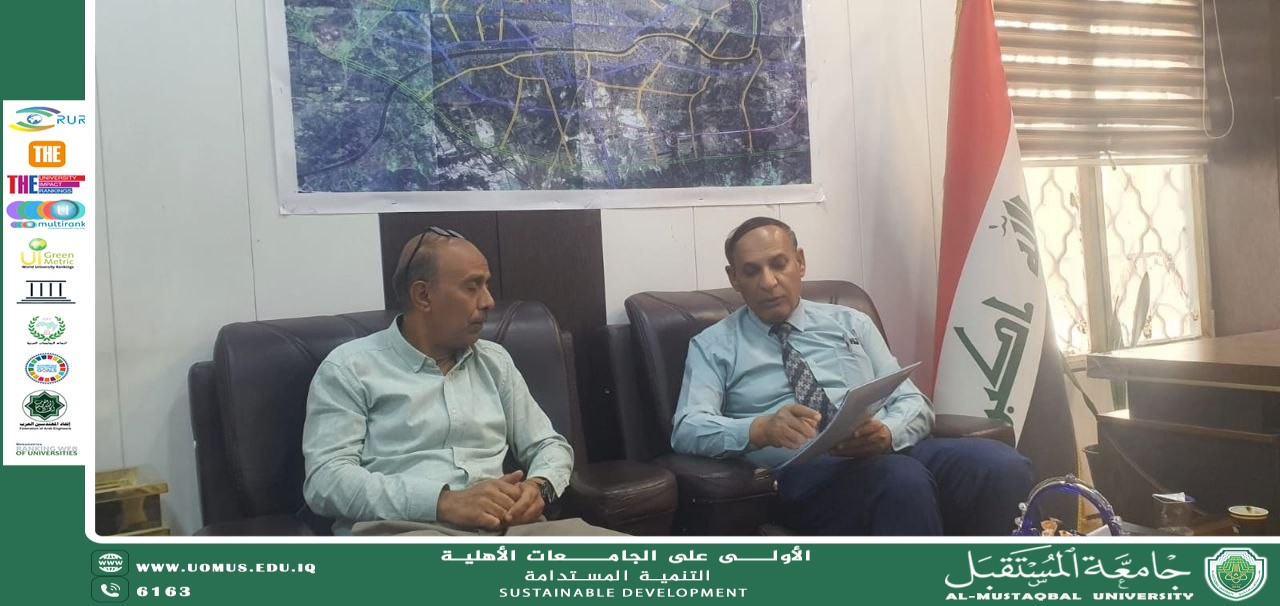
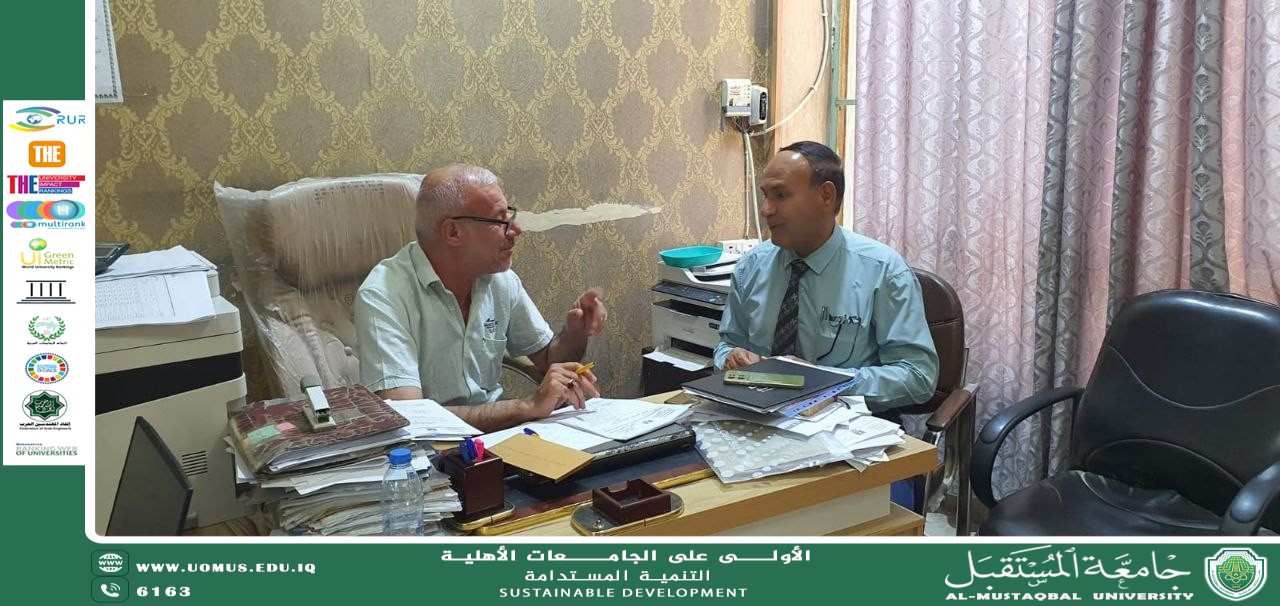
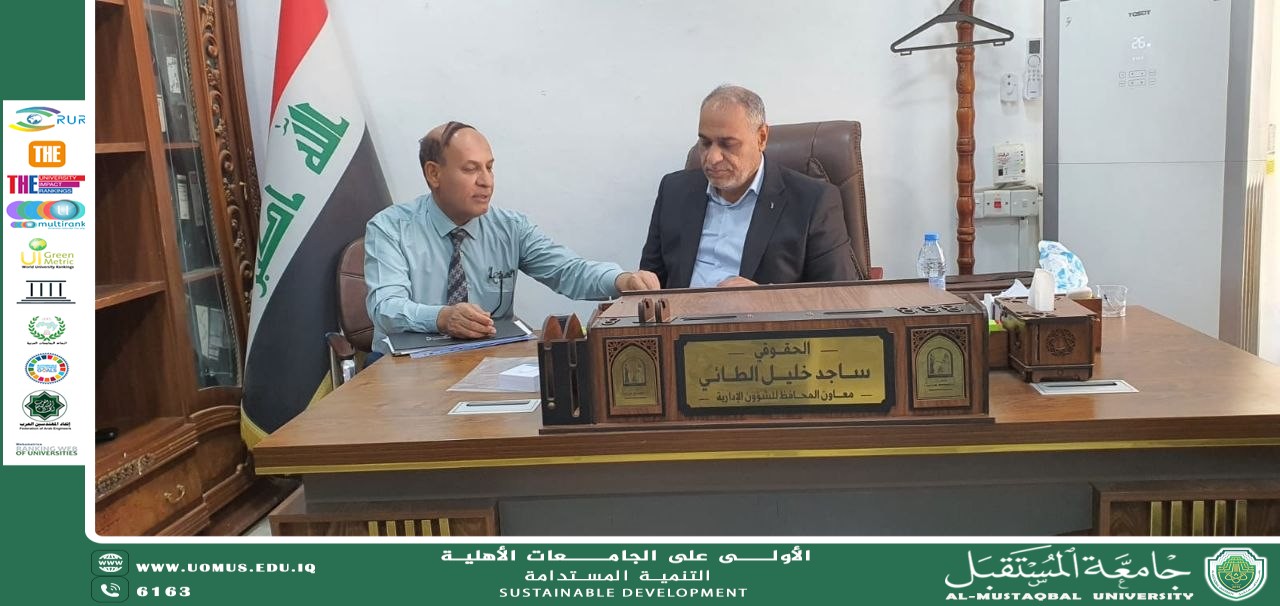
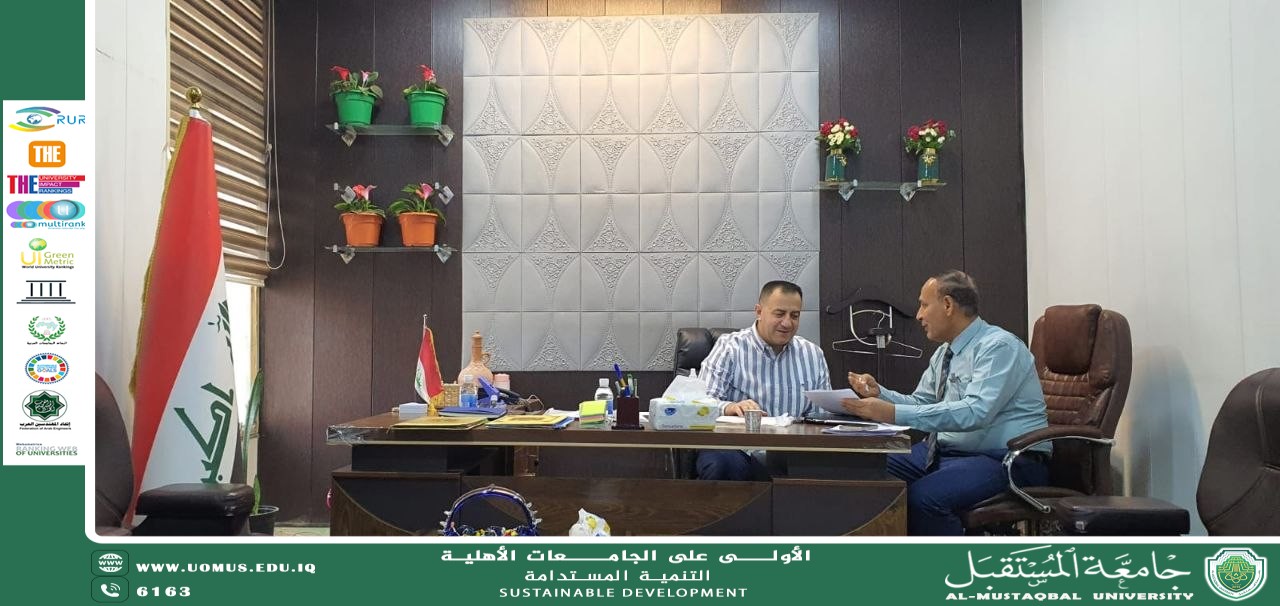
In line with the directives of Professor Dr. Hassan Shaker Majdy, President of Al-Mustaqbal University, aimed at strengthening the University's societal role and reinforcing its position as an active academic institution contributing to sustainable development, and as part of its ongoing efforts to build strategic partnerships with public institutions and transform development challenges into opportunities for innovation and scientific research, Eng. Khalid Kadhim Al-Salihi, Director of the Scientific Outputs Marketing Division, paid an official visit to the Babylon Governorate Office.
During the visit, he met with the Deputy Governor for Planning Affairs, the Deputy Governor for Administrative Affairs, the Director of the Public Policy and Planning Directorate, and a number of specialists to discuss mechanisms for utilizing the University's scientific and research capabilities to address challenges facing the governorate's institutions and various sectors, particularly in the fields of water, energy, environment, youth and sports, urban planning, municipalities, roads and bridges, local security, and agriculture.
The discussions focused on ways to transform these challenges into research themes, applied studies, and scientific projects to be undertaken by the University's colleges and research centers, thereby generating innovative, evidence-based solutions that support decision-makers and contribute to improving public services and enhancing citizens' quality of life.
Both parties emphasized the importance of establishing an effective and sustainable partnership between academic institutions and government entities to ensure that scientific research is directed toward addressing real-world priority issues and advancing local sustainable development through the application of knowledge and innovation for the benefit of society.
Eng. Al-Salihi stated that this initiative represents a practical step toward promoting the commercialization of scientific outputs and linking them to actual community needs by transforming academic knowledge into applicable solutions that support institutional efficiency and contribute to the development of service, economic, and environmental sectors. He further noted that the University had previously addressed official correspondence to government departments and institutions across the governorate, expressing its readiness to translate developmental challenges into applied research studies and graduation projects capable of providing scientifically grounded solutions.
These efforts align with several United Nations Sustainable Development Goals (SDGs), particularly SDG 4 (Quality Education) through the utilization of scientific research for community service, SDG 6 (Clean Water and Sanitation) by supporting sustainable water-resource solutions, SDG 7 (Affordable and Clean Energy) through encouraging research in sustainable energy, SDG 11 (Sustainable Cities and Communities) by contributing to urban planning and infrastructure development, and SDG 17 (Partnerships for the Goals) through strengthening collaboration between the University and public institutions to achieve sustainable development objectives.
This visit forms part of Al-Mustaqbal University's vision to reinforce the concept of a productive and socially impactful university, strengthen the integration between scientific research and local development needs, and generate tangible and sustainable developmental impact in Babylon Governorate while supporting Iraq's broader sustainable development agenda.