Al-Mustaqbal University Supports Sustainable Health and Technology Education through Field Training for Biomedical Engineering Students
ايمان محمد مهدي
26-08-2026
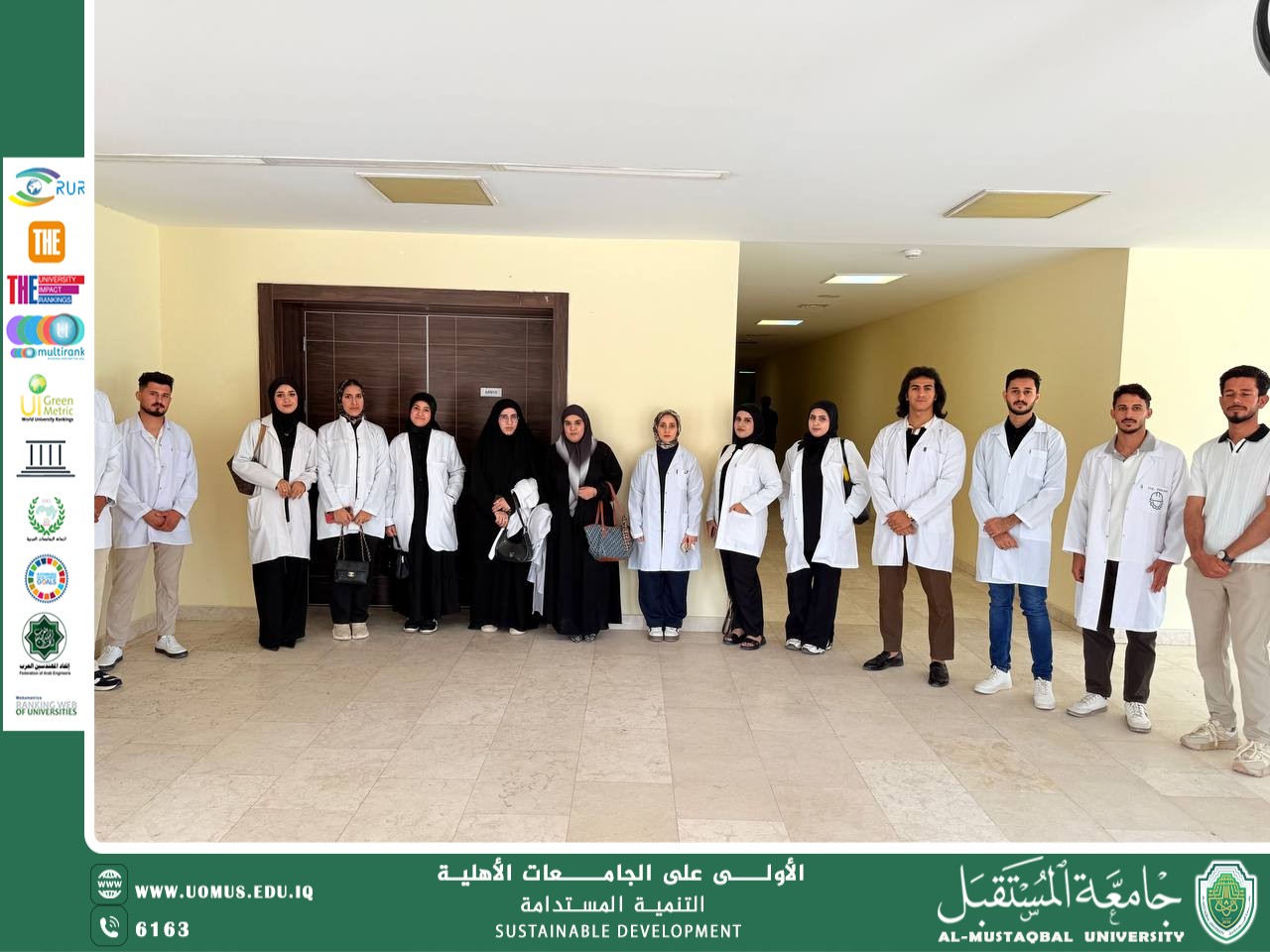


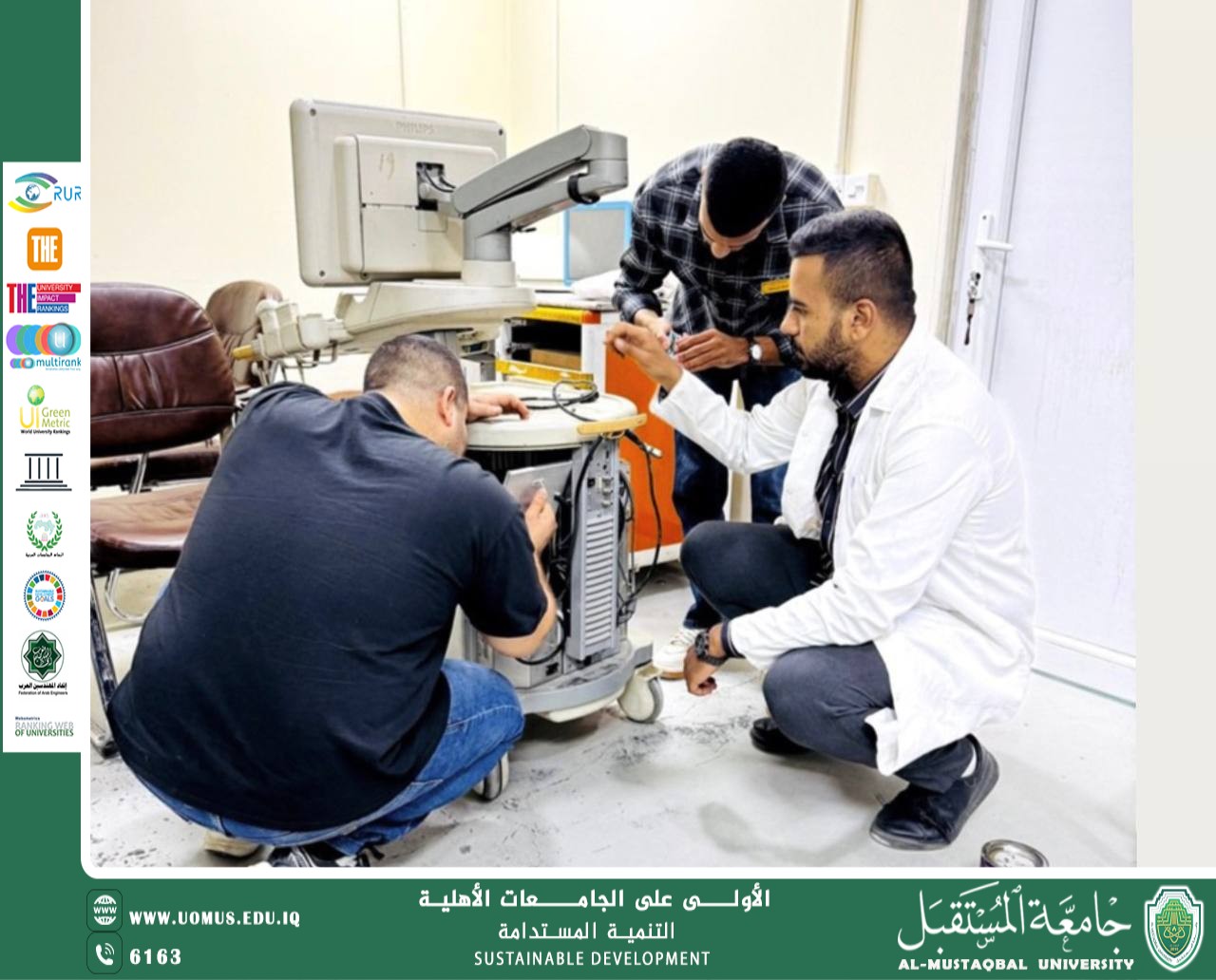
Students from the Department of Biomedical Engineering at the College of Engineering, Al-Mustaqbal University, continue their summer training programme at Marjan Teaching Hospital as part of the University’s commitment to strengthening practice-based education and connecting engineering knowledge with medical applications. The programme contributes to developing students’ technical and professional competencies and enhancing their readiness for the evolving demands of the healthcare labour market.
The training programme included practical sessions on the Ultrasound (Ultrasonography) system, one of the essential medical devices used in diagnostic procedures. The system uses high-frequency sound waves to produce images of organs and tissues inside the human body without the use of X-rays.
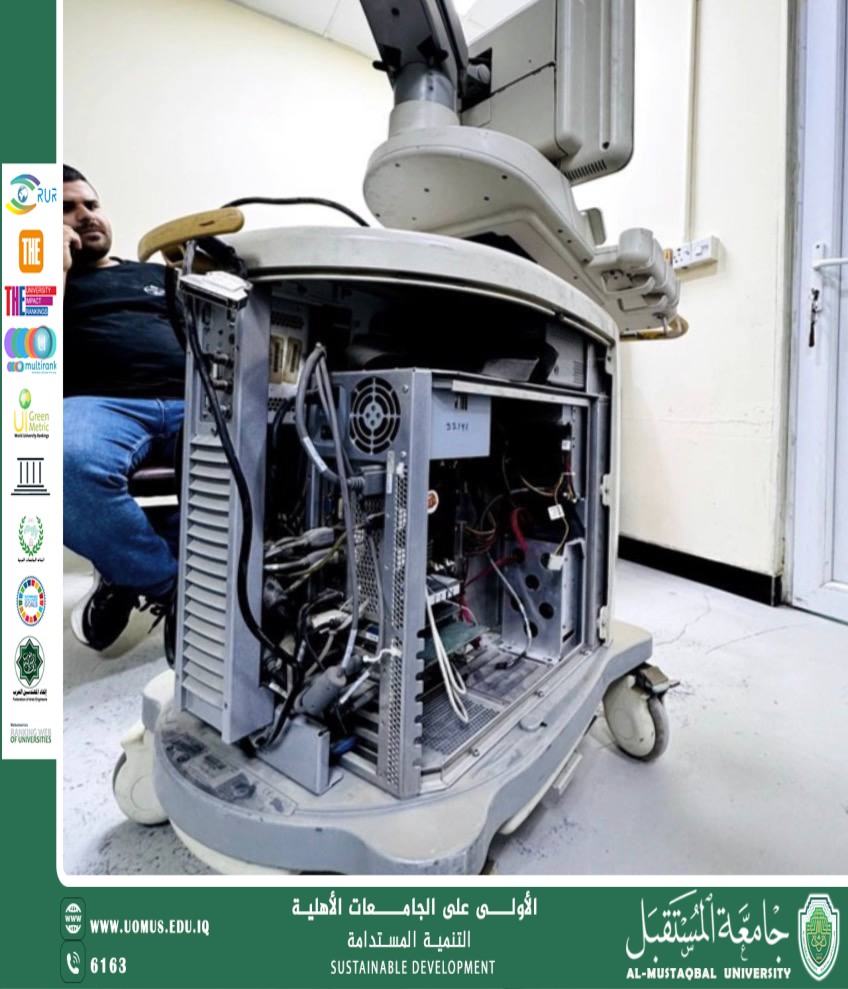
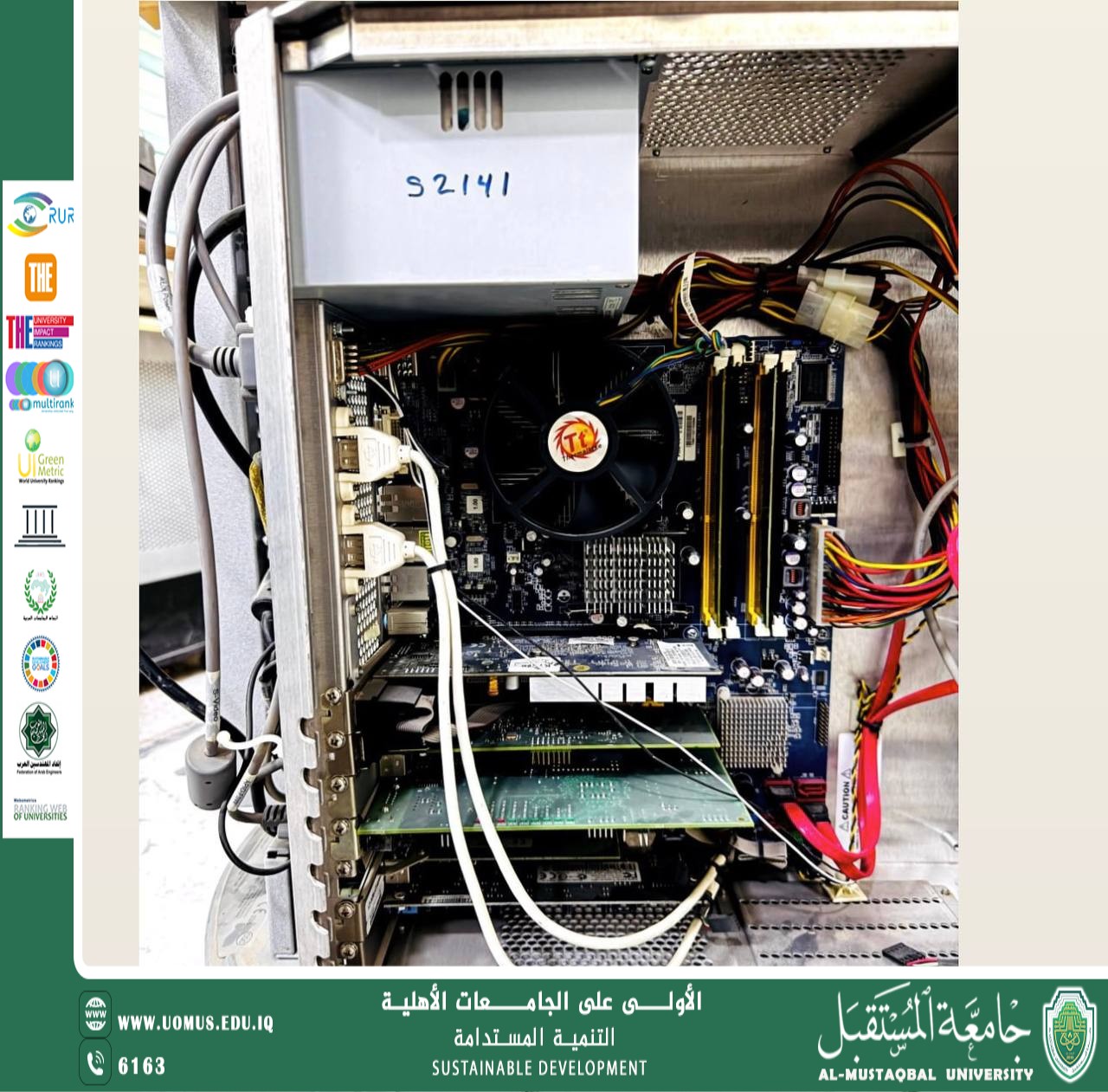
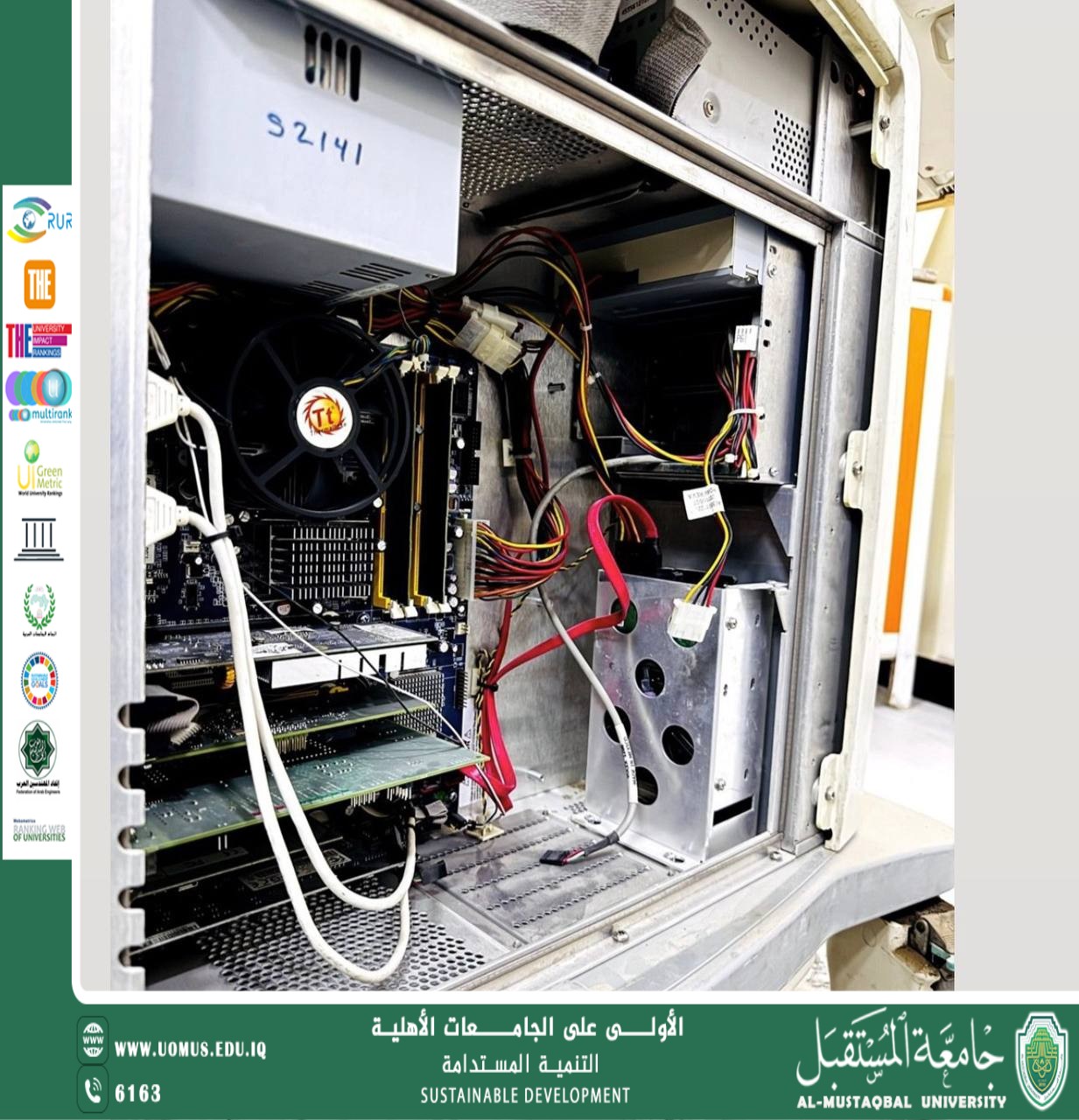
During the training, students examined the system from both engineering and electronic perspectives and were introduced to its main components and their respective functions. These included the Ultrasound Probe/Transducer, Pulser/Transmitter, Receiver, Beamformer, and Signal Processing Unit, in addition to the computer, motherboard, memory, power supply, cooling system, and display.
Students also explored the operating principle of ultrasound technology. The transducer sends high-frequency sound waves into the body and receives the echoes produced when these waves are reflected by different tissues. The echoes are then converted into electrical signals and electronically processed before being displayed as images on the system’s monitor to support medical diagnosis.
The training provided students with valuable practical exposure to the interdisciplinary relationship between engineering, electronics, and medical technology, while enabling them to develop fundamental skills in handling modern medical equipment, understanding its components and operating mechanisms, and becoming familiar with basic approaches to equipment inspection, maintenance, and the identification of potential technical faults.
The programme forms part of Al-Mustaqbal University’s commitment to providing students with practice-based learning and field training opportunities, allowing them to engage directly with technologies used in healthcare institutions. Such experiences contribute to preparing specialized biomedical engineers capable of keeping pace with rapid developments in biomedical engineering and healthcare technology.
This initiative aligns with the United Nations Sustainable Development Goals (SDGs), particularly SDG 4: Quality Education, through providing high-quality practical education and developing students’ technical and professional skills; SDG 3: Good Health and Well-being, by supporting the preparation of specialized professionals in medical technologies and biomedical engineering that contribute to the advancement of healthcare; and SDG 9: Industry, Innovation and Infrastructure, through promoting technological innovation and developing competencies capable of working with advanced medical equipment and systems.
The programme also supports SDG 8: Decent Work and Economic Growth by enhancing students’ employability and developing practical competencies aligned with the needs of the engineering, healthcare, and technology sectors.
Through these training programmes, Al-Mustaqbal University reaffirms its commitment to developing a sustainable educational model that integrates academic knowledge with field experience and strengthens cooperation between the University and healthcare institutions. These efforts contribute to preparing highly qualified biomedical engineers capable of applying knowledge and technology to advance healthcare and serve the community.