Al-Mustaqbal University Radio Continues to Train Media Students to Enhance Professional Skills and Employability
ايمان محمد مهدي
24-08-2026
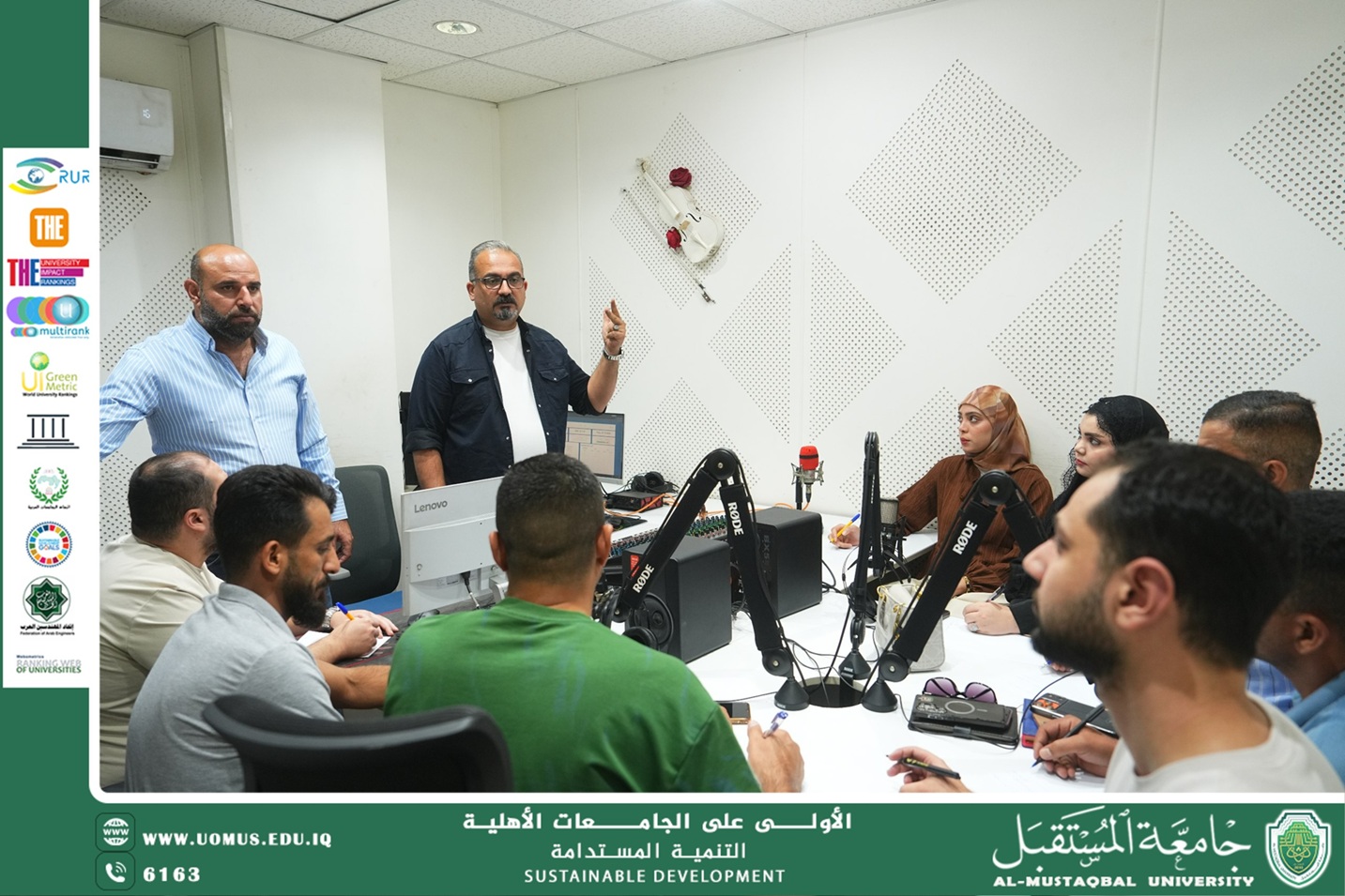


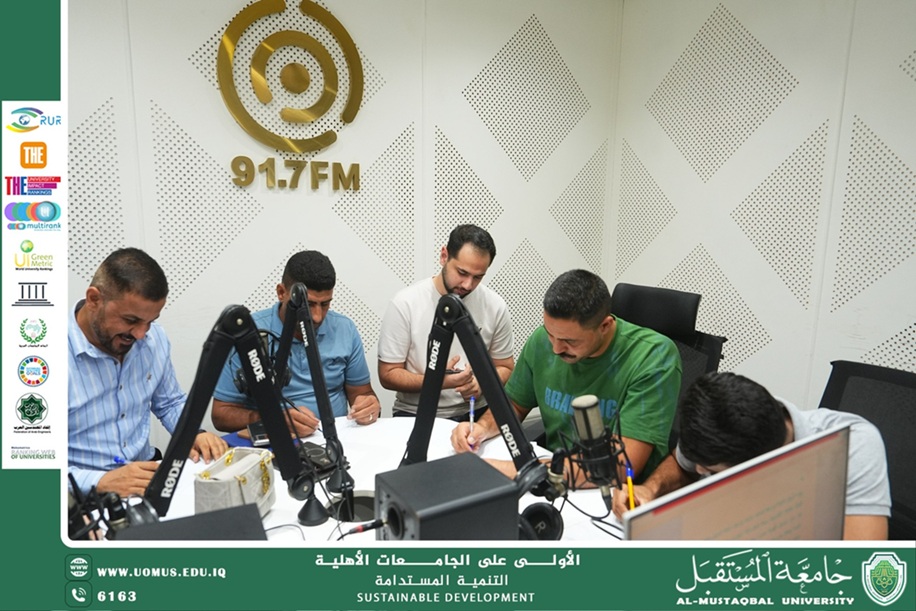
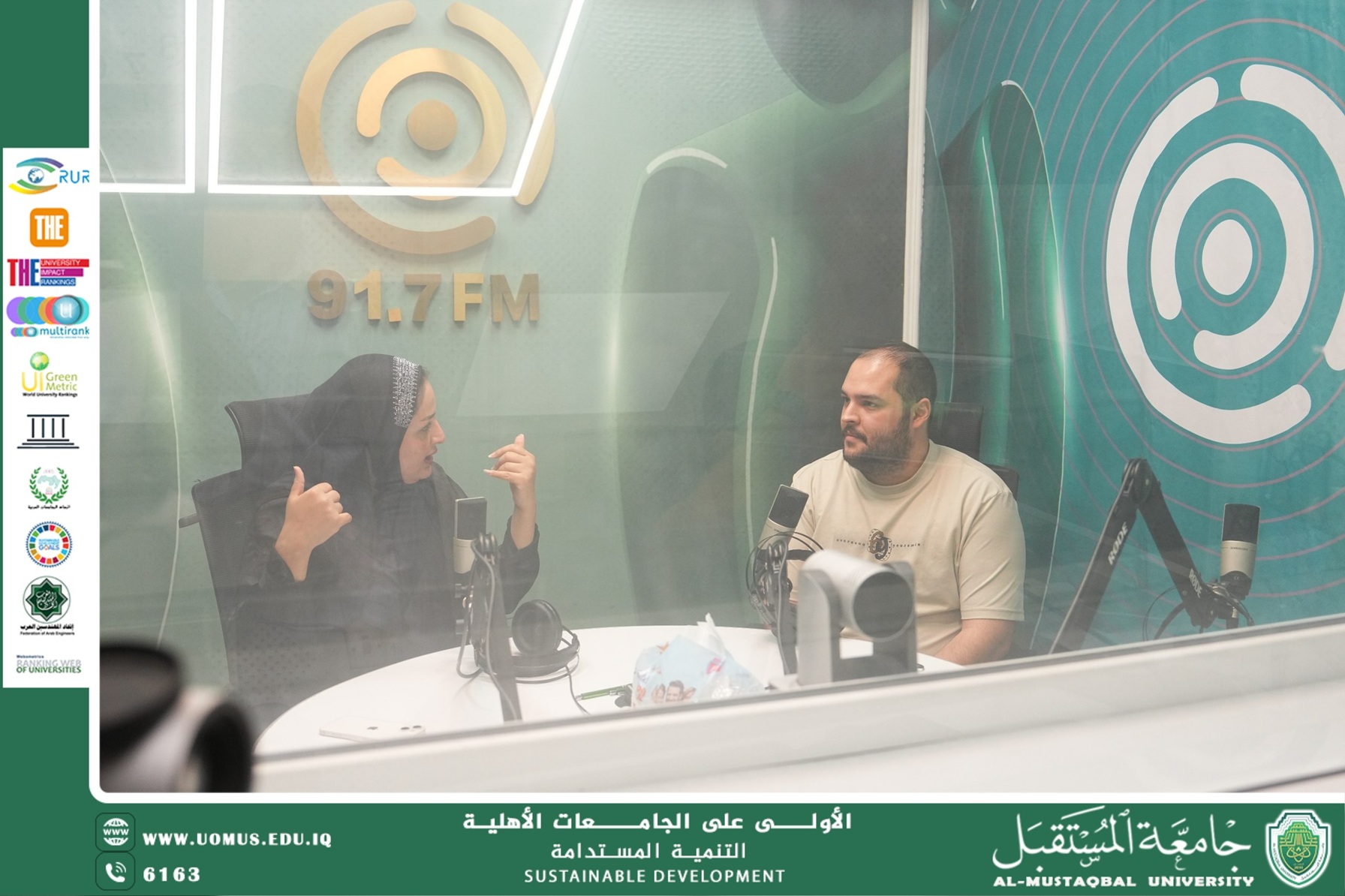
Al-Mustaqbal University Radio continues to host students from the Department of Media at the College of Arts as part of its annual summer training programme. This initiative reflects the University’s commitment to strengthening the practical dimension of higher education and providing a training environment that develops students’ professional skills while bridging the gap between academic knowledge and the requirements of the media labour market.
The programme aims to provide students with hands-on experience across various areas of radio broadcasting and give them the opportunity to gain first-hand insight into professional media practices. This practical exposure contributes to enhancing their professional competencies and developing their practical experience throughout their university studies.
Mr. Zaid Al-Shawka, Director of Al-Mustaqbal University Radio, explained that the programme provides students with an important opportunity to gain practical experience in the different stages of radio production, beginning with programme and report preparation and audio content production, followed by hands-on training in studio equipment and recording techniques, and extending to editing and production processes.
He noted that the Radio is committed to providing an engaging and supportive training environment that enables students to develop their skills and gain practical experience, thereby strengthening their confidence and enhancing their readiness to enter the media labour market, which continues to undergo rapid technological and content-production transformations.
The summer training programme forms part of Al-Mustaqbal University’s commitment to practice-based learning and sustainable professional training, strengthening the integration of academic education with practical experience and contributing to the preparation of graduates equipped with the skills and competencies required to respond effectively to the rapidly evolving labour market.
The initiative is aligned with the United Nations Sustainable Development Goals (SDGs), particularly SDG 4: Quality Education, through providing practical educational and training opportunities that contribute to students’ skills development, and SDG 8: Decent Work and Economic Growth, by enhancing students’ employability and equipping them with professional skills relevant to the labour market. It also supports the principle of lifelong learning and continuous professional development.
The programme further reflects the University’s commitment to strengthening collaboration between educational institutions and the professional sector and creating training pathways that enable students to transition from theoretical knowledge to professional practice more effectively. This contributes to preparing qualified media professionals capable of responding to the demands of modern media.