Panel Session Highlights the Role of the Private Sector and Universities in Building Sustainable Cities within the Al-Mustaqbal Forum
اسراء خالد كاظم
27-04-2025


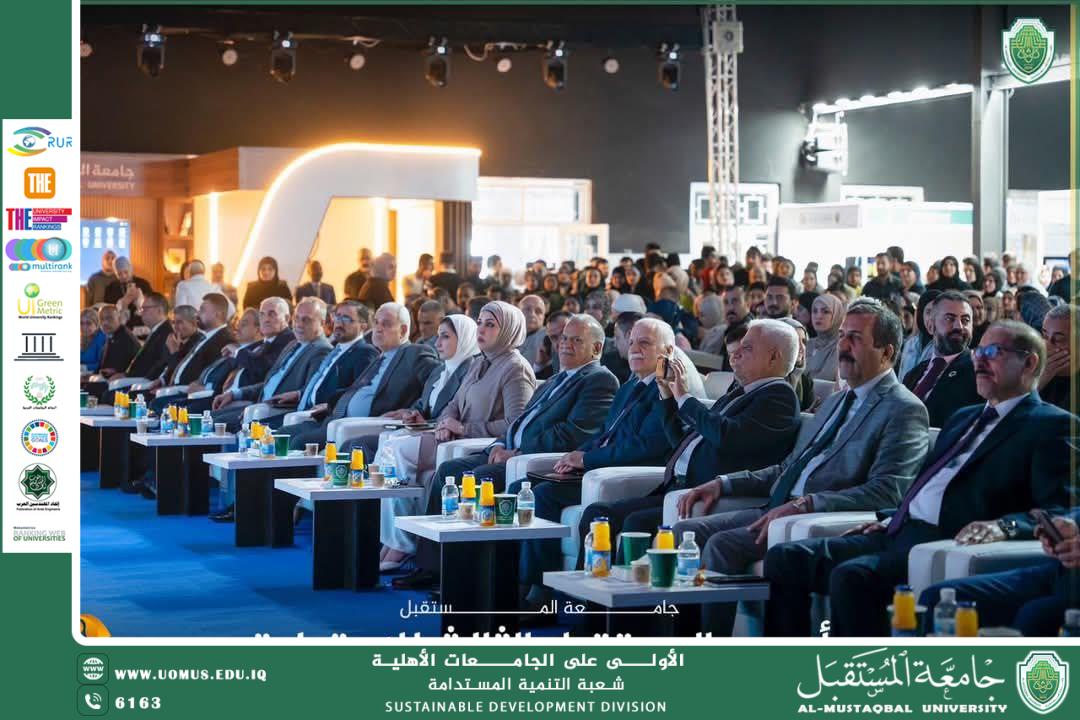
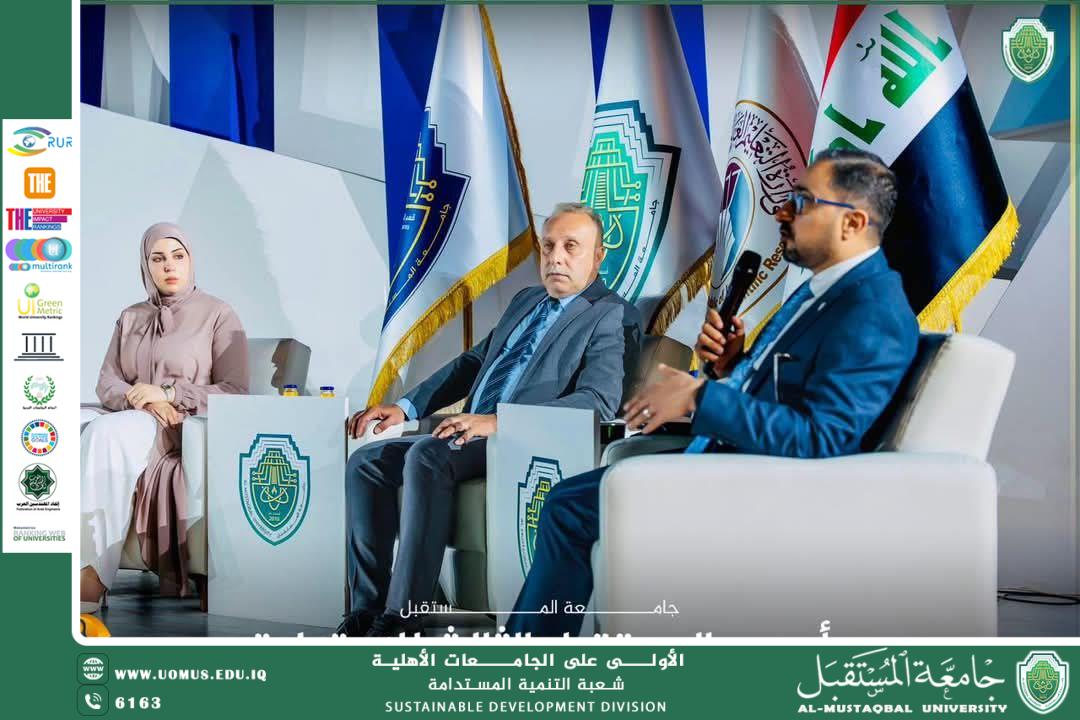
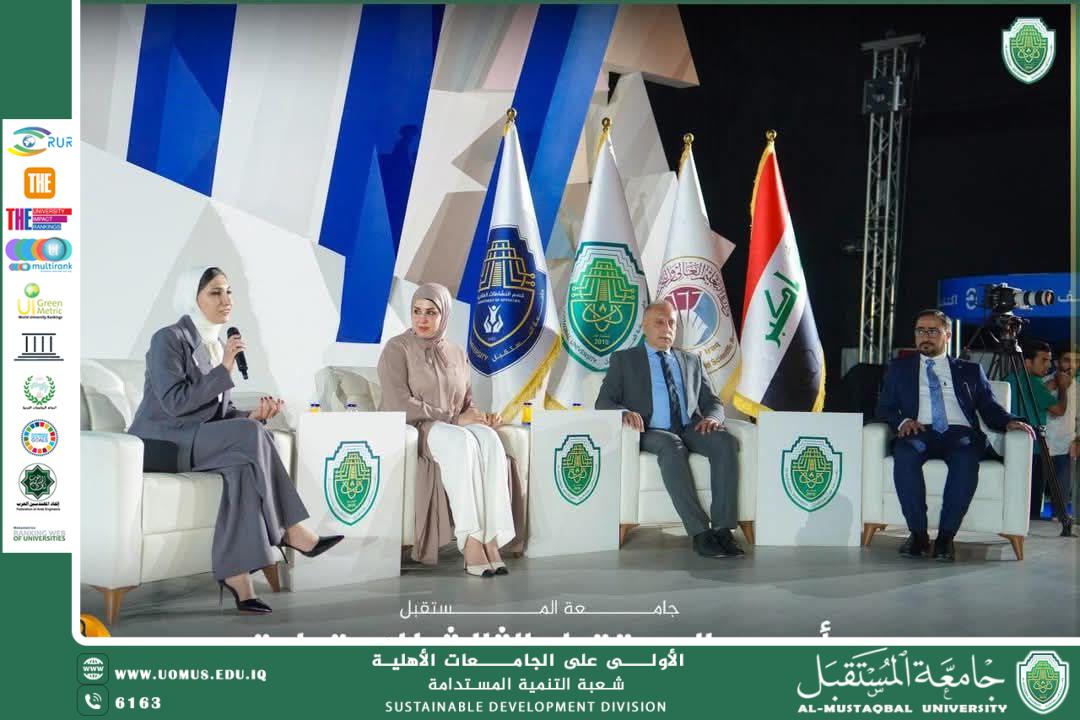
As part of the fourth day of the Third International Al-Mustaqbal Week for Sustainability 2025, Al-Mustaqbal University organized a distinguished panel session within the activities of the Al-Mustaqbal Forum for Civil Society Organizations and the Private Sector, titled: "From Vision to Reality: The Private Sector as a Driver of Sustainable Cities," attracting notable academic and professional participation.
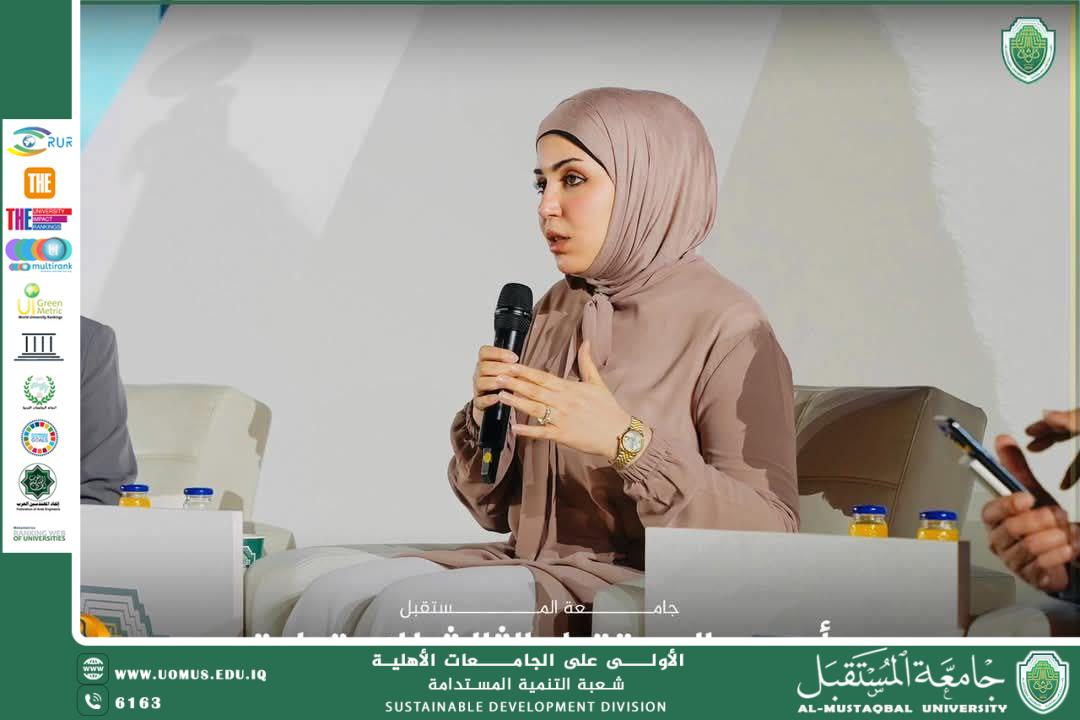
The session was moderated by Architect Umaima Kazem Al-Taie, a specialist in sustainable urban design, who opened the discussion by emphasizing that integration between the public and private sectors, as well as academic and community institutions, constitutes the fundamental basis for shaping a more just and sustainable urban environment.
The session featured active participation from prominent figures, including Dr. Batool Mowafaq Kazem, Chairwoman of the Board of Trustees of Al-Farahidi University and Scientific and Academic Advisor to the First Deputy Speaker of the Iraqi Parliament. Dr. Kazem presented an advanced vision of how private universities can evolve into key actors in sustainable urban development through targeted curricula, practices, and urban planning, as well as by fostering community awareness that strengthens a culture of sustainability.
Dr. Haider Al-Kafishi, a consulting architect and founder of the "Green Smart Cities Sustainability" organization, discussed the vital impact of civil society organizations in improving urban quality of life and promoting social cohesion, despite the challenges and constraints faced by these organizations in complex and changing environments.
Additionally, Dr. Zuhair Nassar, Assistant Professor in Digital Design and Consultant in Smart Design Technologies (BIM), contributed with an intervention focusing on the importance of partnerships between the private sector and urban institutions. He called for the adoption of modern technology and digital innovation in implementing sustainable urban development projects to achieve long-term transformations that foster the creation of smart and eco-friendly cities.
The session concluded with a set of recommendations that emphasized the need to strengthen cooperation and coordination between universities, civil society organizations, the private sector, and government entities through an integrated approach based on innovation, awareness, and joint planning. These elements were identified as key tools for building more just, green, and sustainable cities, in alignment with the Sustainable Development Goals (SDGs), particularly SDG 11 (Sustainable Cities and Communities) and SDG 17 (Partnerships for the Goals).