Al-Mustaqbal University Strengthens Its International Sustainability Presence with Research on Visual Pollution and the Learning Environment
ايمان محمد مهدي
05-09-2026
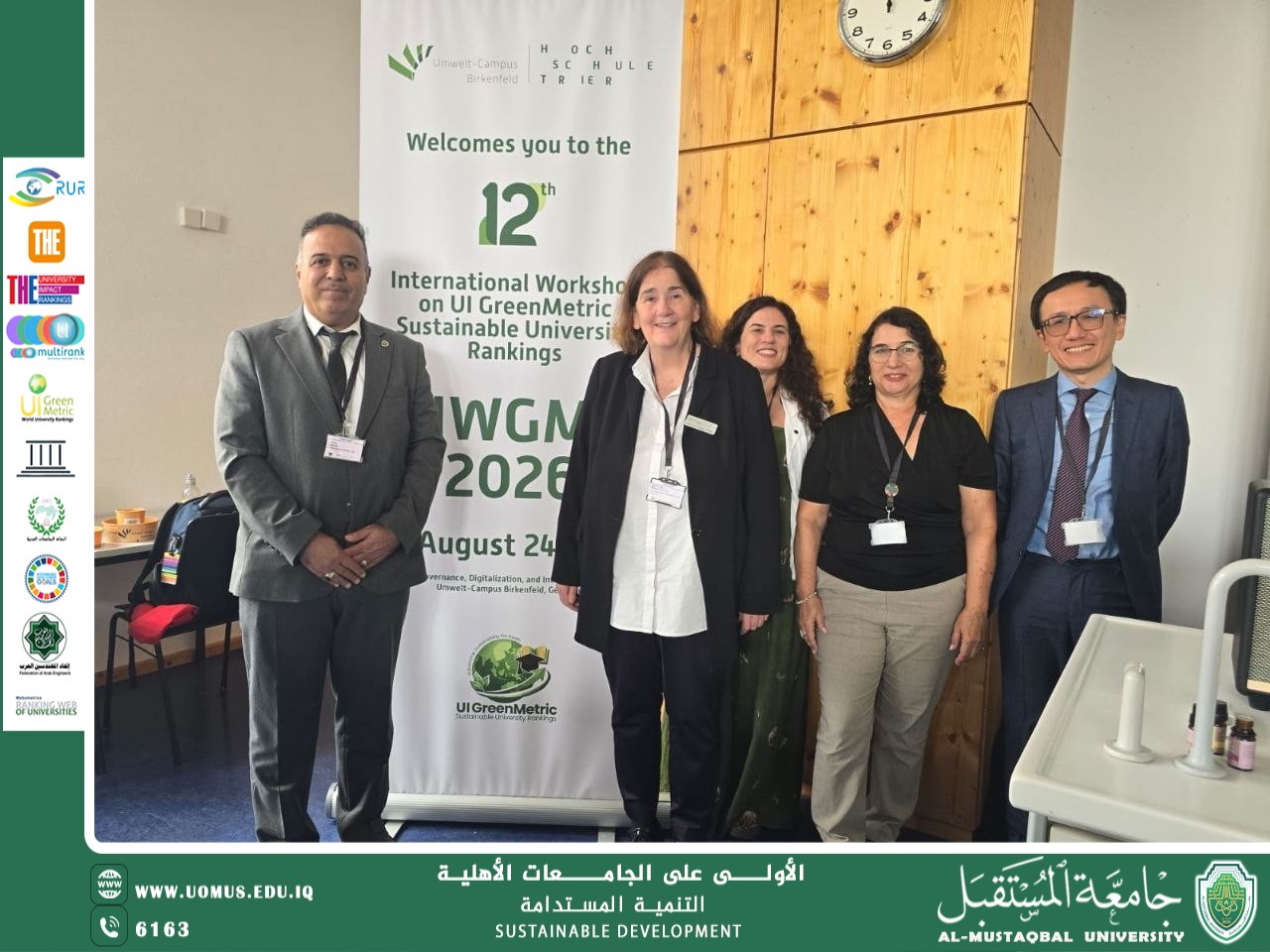


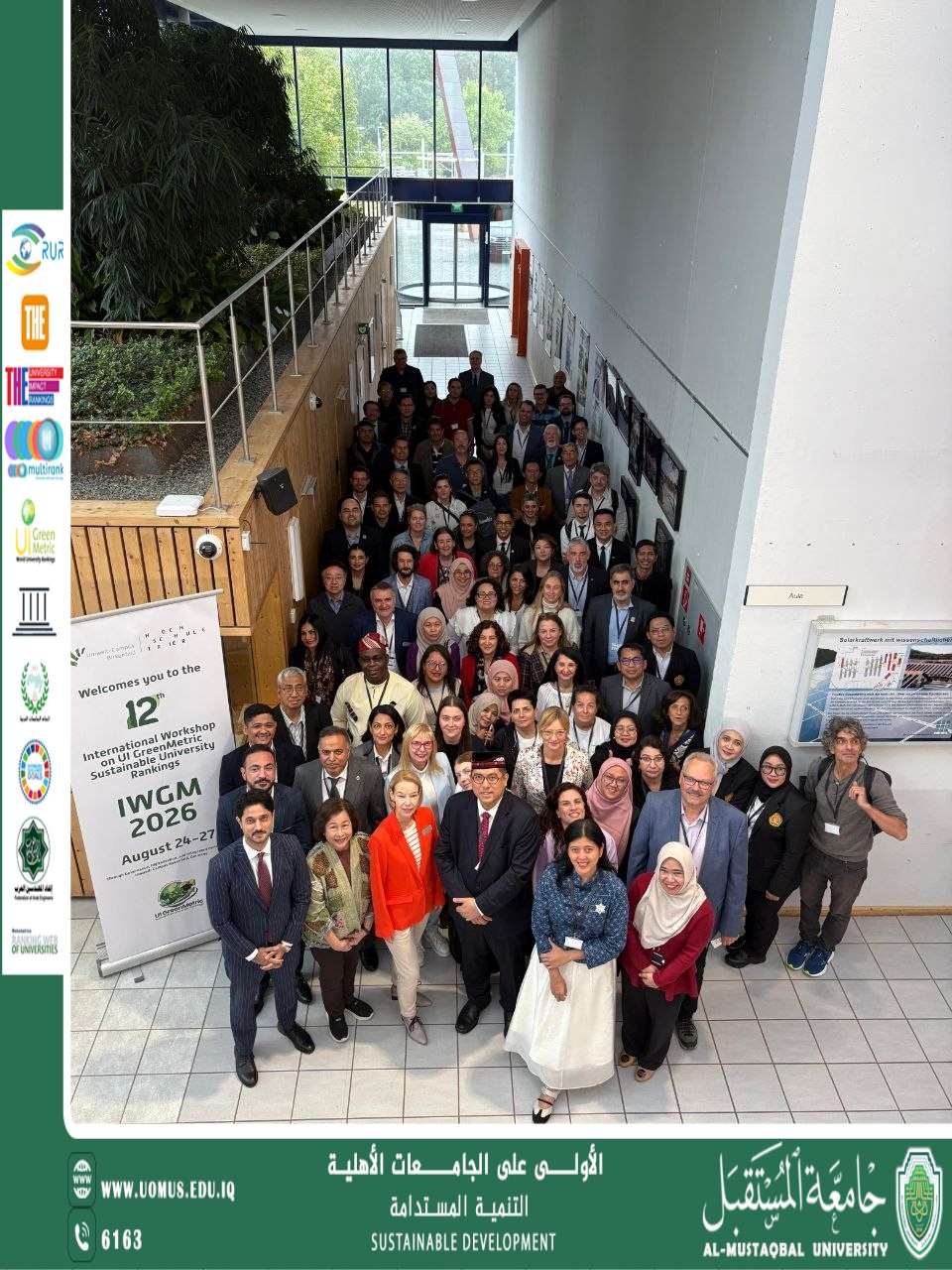
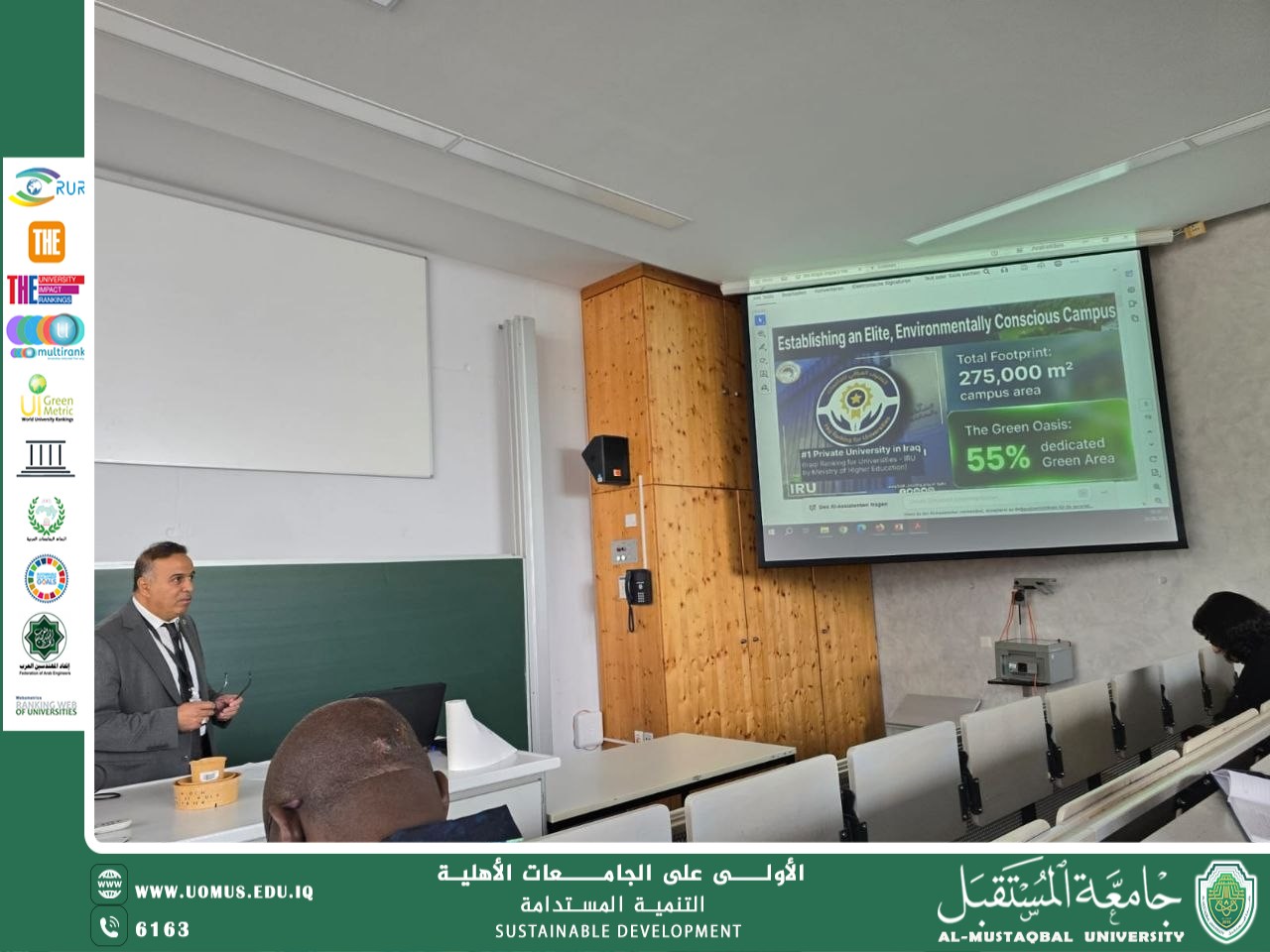
As part of its international participation in the 12th International Workshop on UI GreenMetric for Sustainable Universities (IWGM 2026), hosted by the Umwelt-Campus Birkenfeld, a campus of Trier University of Applied Sciences in Germany, Al-Mustaqbal University presented and discussed a scientific study addressing an environmental challenge with educational, psychological, and social dimensions, focusing on the impact of visual pollution resulting from waste sites on the environment surrounding schools.
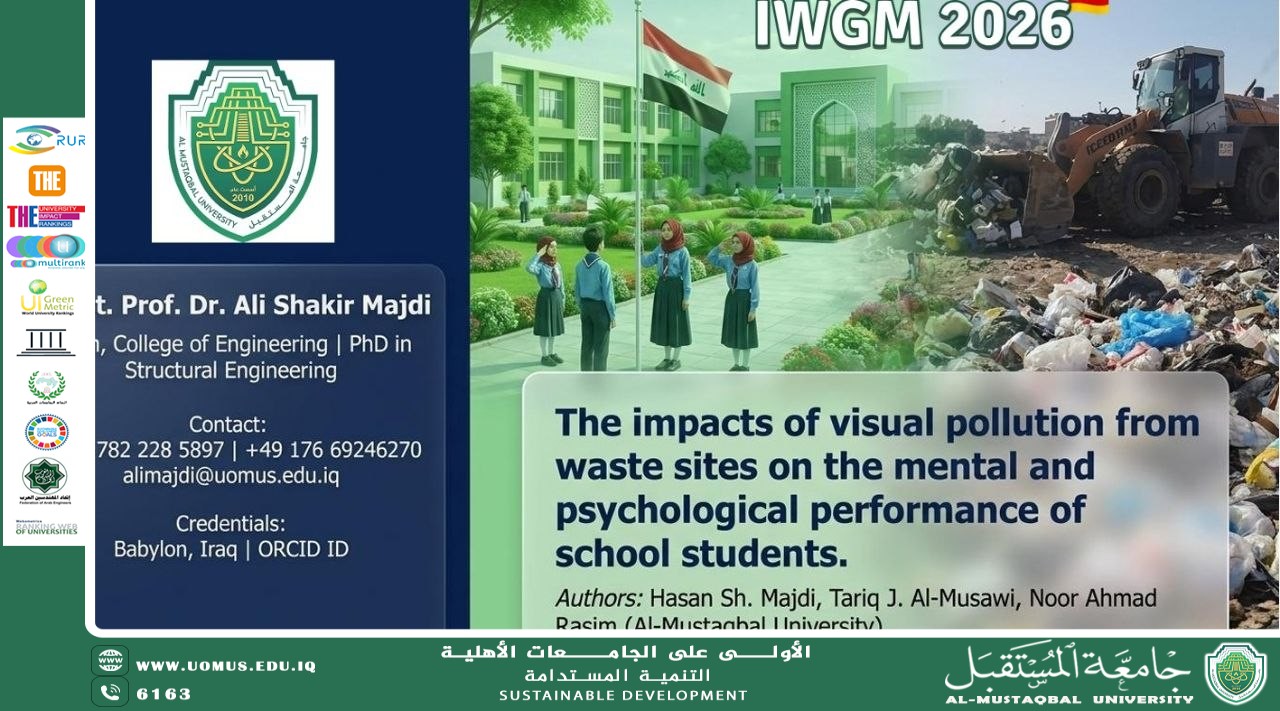
Assistant Professor Dr. Ali Majdi, Dean of the College of Engineering at Al-Mustaqbal University, presented the research paper entitled:
“The Impacts of Visual Pollution from Waste Sites on the Mental and Psychological Performance of School Students.”
The study examined the issue of visual pollution resulting from waste accumulation and indiscriminate dumping in areas surrounding educational institutions, with particular emphasis on its potential effects on students’ psychological, cognitive, and behavioural well-being. The research was based on a field survey involving 400 secondary school students in Babylon Governorate, using a 15-item scale addressing several indicators, including concentration, organization of thoughts, anxiety, psychological discomfort, behaviour, and environmental awareness.
The presentation also featured authentic field photographs from the study sites in Babylon Governorate, together with the key findings, which indicated noticeable levels of difficulty in concentration, psychological discomfort, and anxiety among students exposed to visually polluted environments. The findings also highlighted the influence of such environments on certain behaviours and environmental practices.
The research attracted considerable interest and engagement from the workshop participants, particularly because it presented an integrated perspective on the relationship between the quality of the environment surrounding educational institutions, sustainability, students’ psychological well-being, and the quality of the learning environment. The discussion also emphasized the importance of addressing visual pollution as an issue that extends beyond aesthetic concerns to encompass educational, psychological, environmental, and social dimensions requiring further research and sustainable interventions.
This participation is aligned with Al-Mustaqbal University’s commitment to leveraging scientific research to address real-world environmental and societal challenges and strengthening its academic presence at international sustainability forums. It also reflects the University’s efforts to extend sustainability concepts and practices beyond the campus and contribute to healthier, higher-quality, and more sustainable learning environments.
Contribution to the Sustainable Development Goals
The study contributes to several United Nations Sustainable Development Goals (SDGs), most notably:
SDG 4: Quality Education, by addressing the quality of the learning environment and factors that may influence students’ concentration, performance, and psychological well-being.
SDG 3: Good Health and Well-being, by highlighting the psychological and mental dimensions associated with exposure to visually polluted environments.
SDG 11: Sustainable Cities and Communities, by addressing waste accumulation and unsustainable environmental conditions surrounding educational institutions and promoting improvements in urban environmental quality.
SDG 12: Responsible Consumption and Production, by promoting awareness of responsible waste-management practices and reducing indiscriminate dumping.
SDG 13: Climate Action, by promoting environmental awareness and highlighting the role of educational institutions and scientific research in addressing environmental challenges and fostering sustainable behaviours.
Through this participation, Al-Mustaqbal University reaffirms its commitment to supporting scientific research related to sustainable development, strengthening international engagement and collaboration in the field of sustainability, and transforming academic knowledge into practical solutions and practices capable of generating a positive impact on the environment and society.