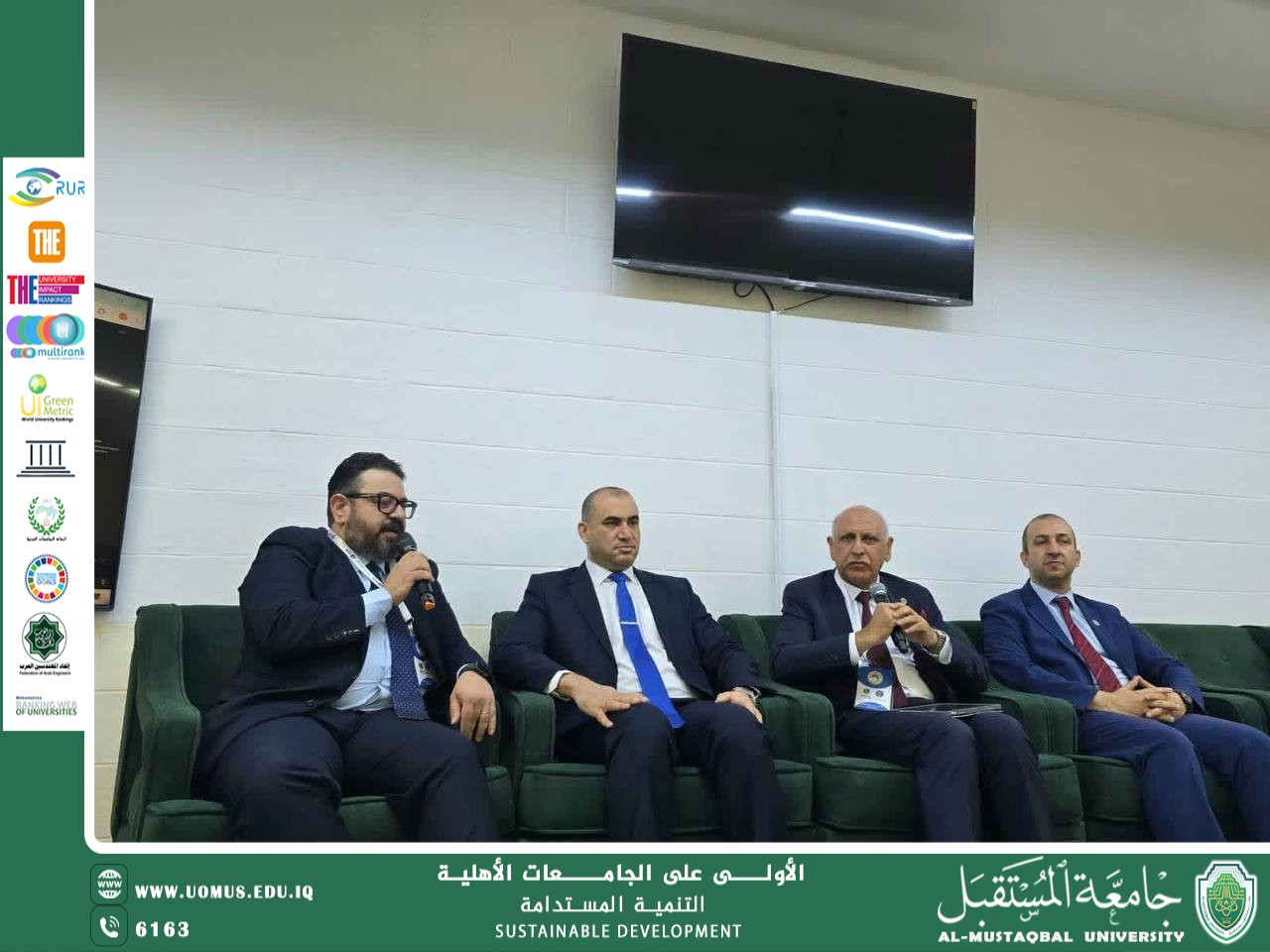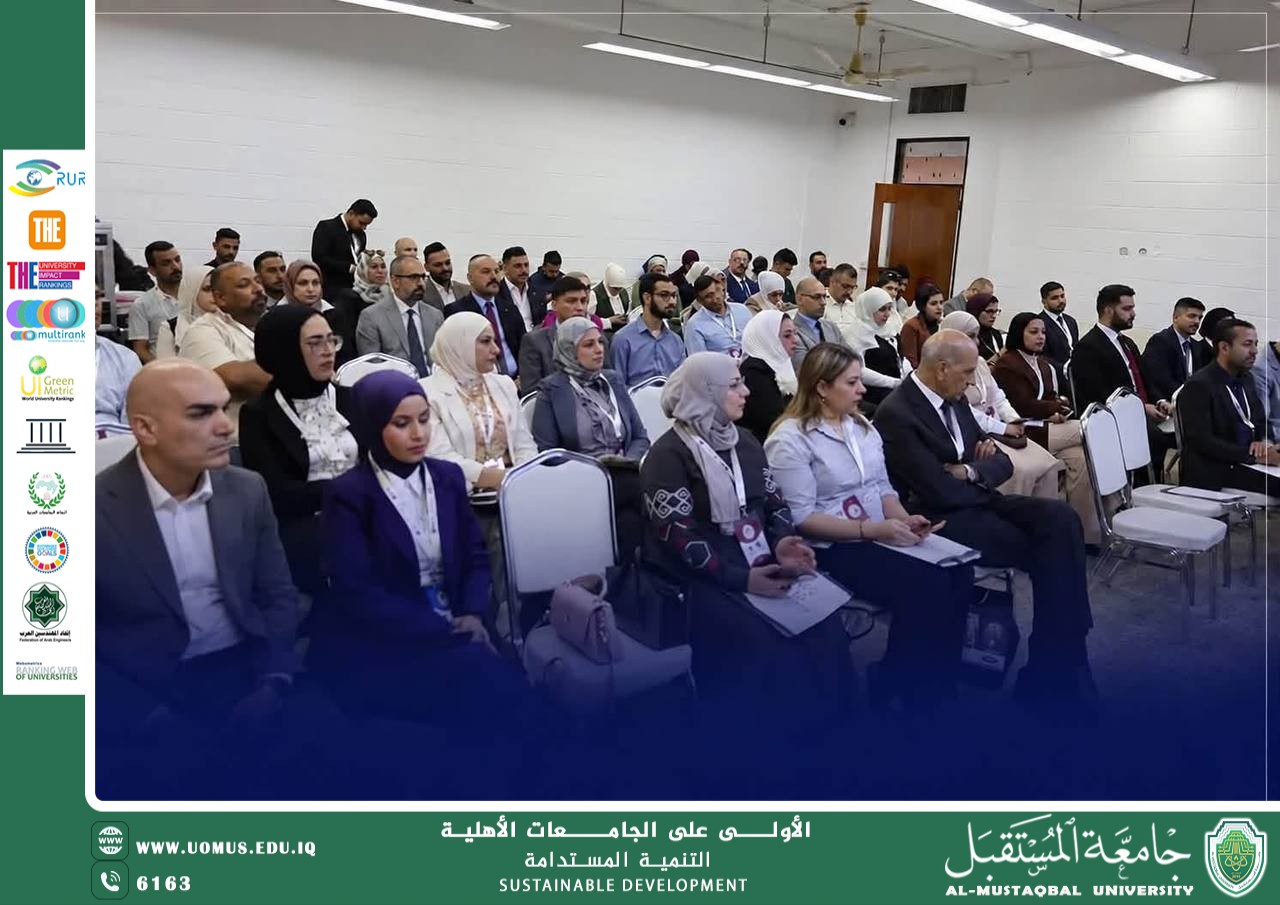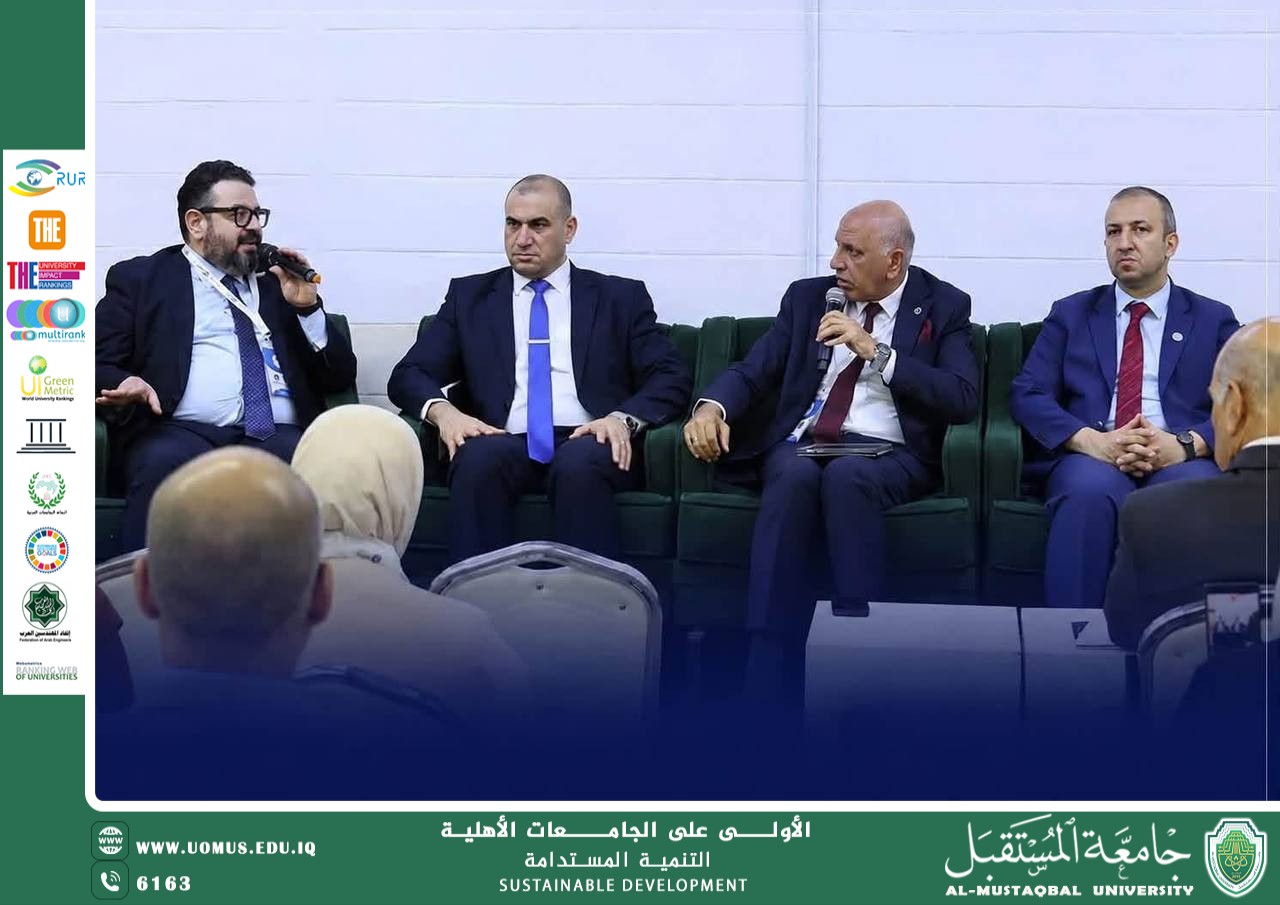
As part of its active engagement in national discussions on advancing higher education, Al-Mustaqbal University participated in the discussion session entitled “Academic Programmes that Develop the Nation's Institutions and Support Society”, held as part of the third edition of the Iraq Education Conference 2026. The session featured Professor Dr Muzaffar Sadiq Al-Zuhairi, Director of Scientific and Academic Supervision at Al-Mustaqbal University, alongside a group of academic leaders, experts, and higher education specialists.
The session, moderated by Assistant Professor Dr Hazim Abdul Razzaq, Director General of the Department of Studies, Planning and Follow-up, addressed the role of academic programmes in developing public and private sector institutions, aligning educational outcomes with national development priorities and labour market needs, and anticipating the disciplines and skills required by the future Iraqi economy.
During his contribution, Professor Dr Muzaffar Sadiq Al-Zuhairi presented Al-Mustaqbal University's vision for developing priority academic programmes in Iraq. He emphasised the importance of moving beyond the quantitative expansion of academic disciplines towards high-quality programmes based on analysing institutional needs, identifying skills gaps in the labour market, and addressing development priorities. This approach, he noted, would help generate a tangible impact on institutional performance and community service.
He explained that the next stage requires stronger integration between applied education, polytechnic programmes, digital transformation, and modern technologies, with particular attention to the energy, water, agriculture, industry, infrastructure, and institutional management sectors, in addition to health and technology disciplines. Such an approach would help prepare graduates with practical competencies and the ability to adapt to rapid changes in the workplace.
He also outlined several priority academic fields, including industrial automation and maintenance technologies, electrical and renewable energy, water and wastewater treatment, smart agriculture and agricultural technologies, artificial intelligence, cybersecurity and data analytics, construction and infrastructure technologies, medical devices and health informatics, as well as quality management, institutional excellence, project management, and performance indicators.
Al-Zuhairi stressed that developing these programmes should be accompanied by effective partnerships with ministries, government institutions, and private sector companies. He highlighted the importance of involving employers in curriculum design, identifying required competencies, and providing practical training opportunities to improve graduates' employment prospects and reinforce the concept of a productive university connected to society's priorities.
He further noted that this direction aligns with national development requirements, digital transformation, and the green economy, particularly in light of the growing demand for digital skills and sustainable technologies. This calls for a more flexible academic system that can respond effectively to economic and technological changes.
The themes addressed during the session align with several United Nations Sustainable Development Goals, particularly SDG 4: Quality Education, through the development of high-quality academic programmes and the promotion of applied learning and professional skills; SDG 8: Decent Work and Economic Growth, by aligning educational outcomes with labour market needs and improving graduates' employment opportunities; and SDG 9: Industry, Innovation and Infrastructure, through supporting technical disciplines, innovation, and digital transformation. The discussion also supports SDG 17: Partnerships for the Goals, by promoting cooperation among universities, government institutions, and the private sector.
This participation reflects Al-Mustaqbal University's direction, under the leadership of its President, Professor Dr Hassan Shaker Majdi, to contribute to shaping higher education development strategies and proposing academic initiatives that respond to Iraq's needs, strengthen the connection between knowledge and practical application, and place community service and sustainable development at the heart of its institutional mission.