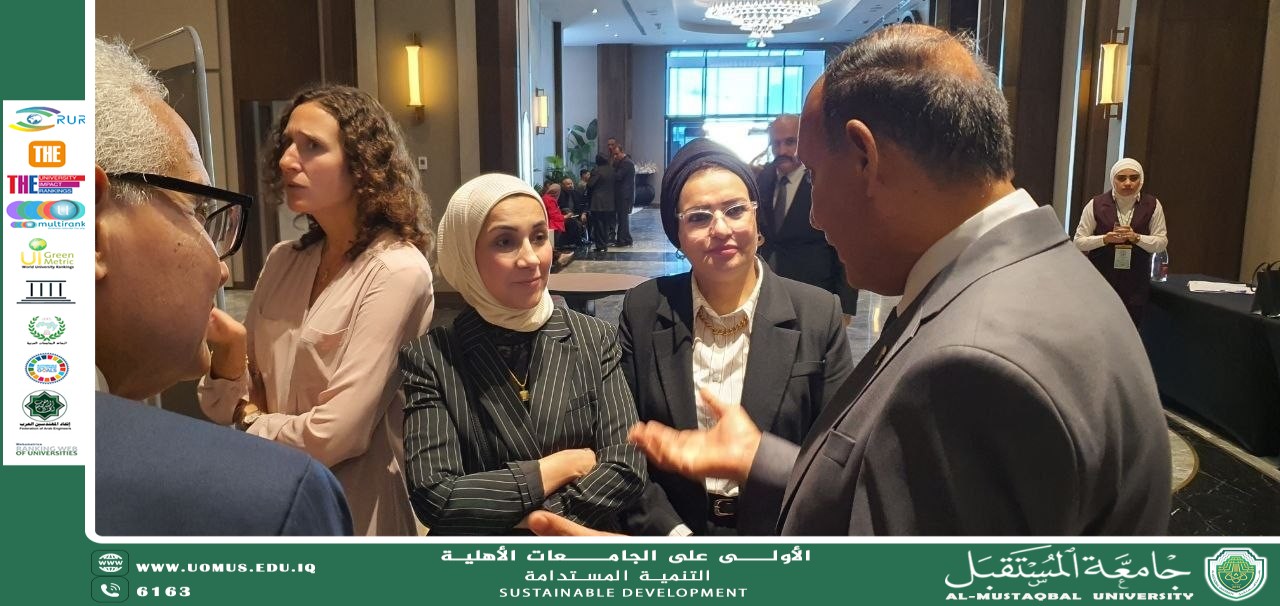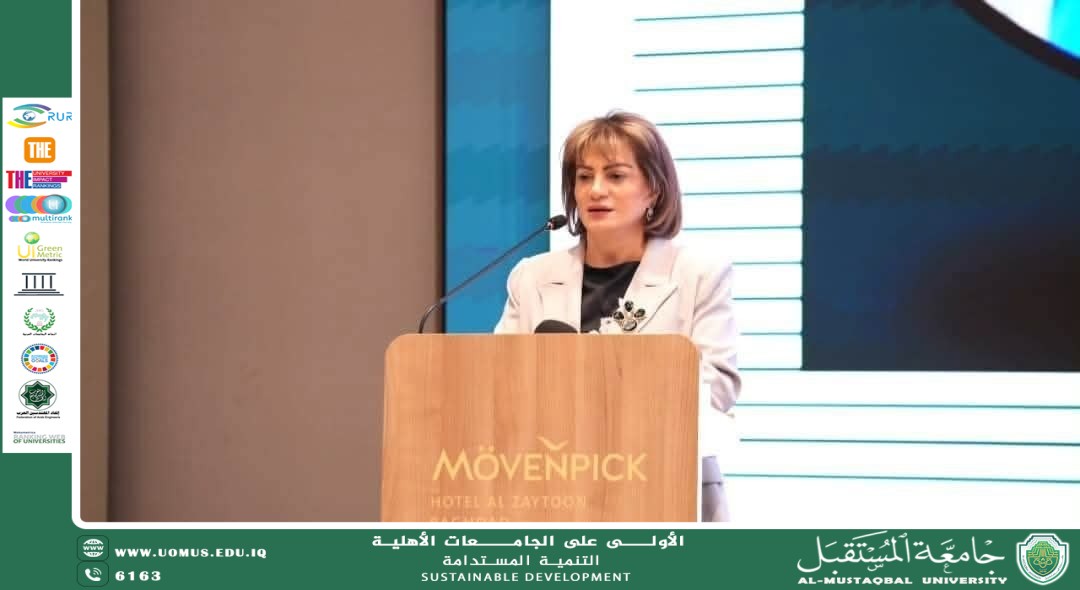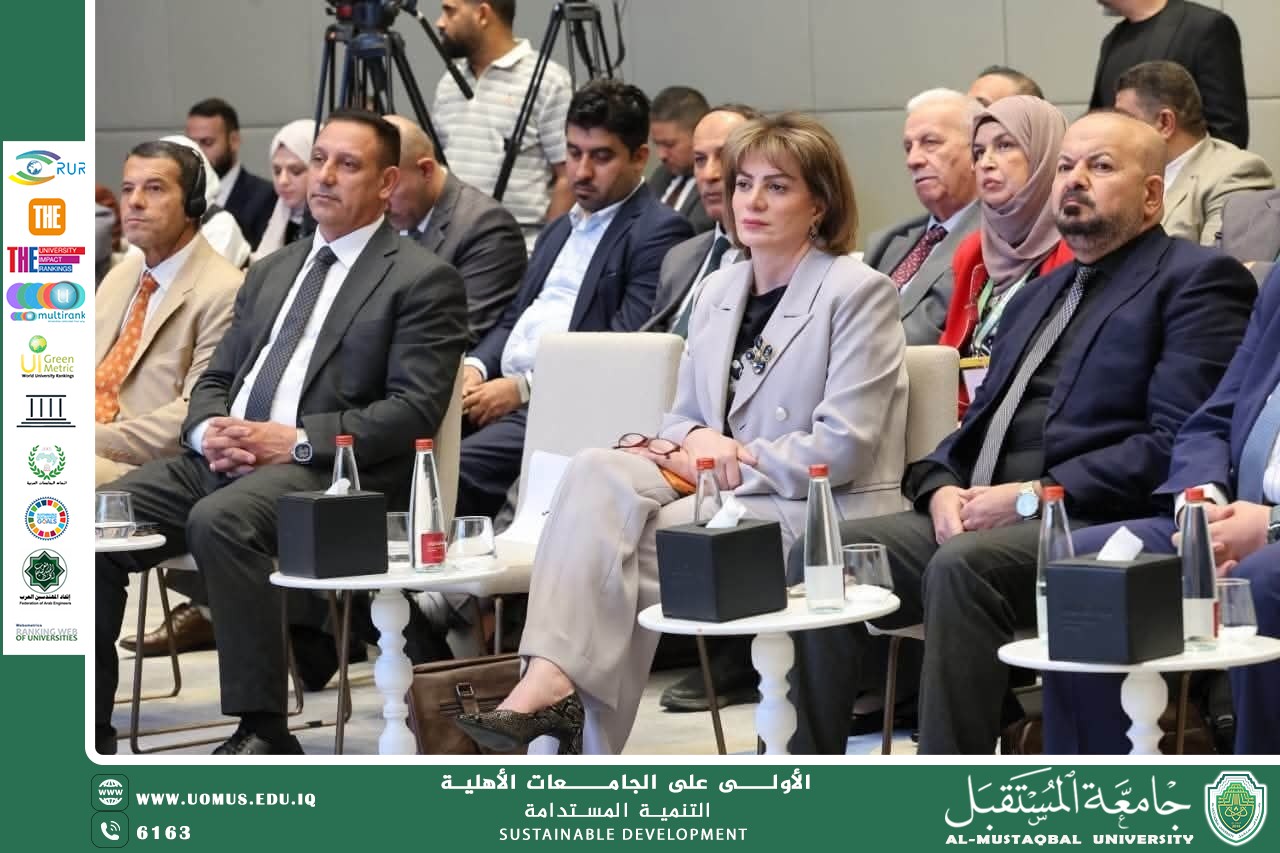
Al-Mustaqbal University participated in the conference marking the launch of the Local Nationally Determined Contributions (Local NDC) Document for addressing climate change in Babil and Dhi Qar Governorates. The conference was attended by the Minister of Environment, representatives of the local governments of both governorates, Director Generals from the Ministry of Environment and sectoral institutions, as well as representatives of international organisations and donor agencies. Participants also included representatives of the international organisation CRS, which sponsored the conference, and Al-Aghsan Foundation for Agricultural and Environmental Development.
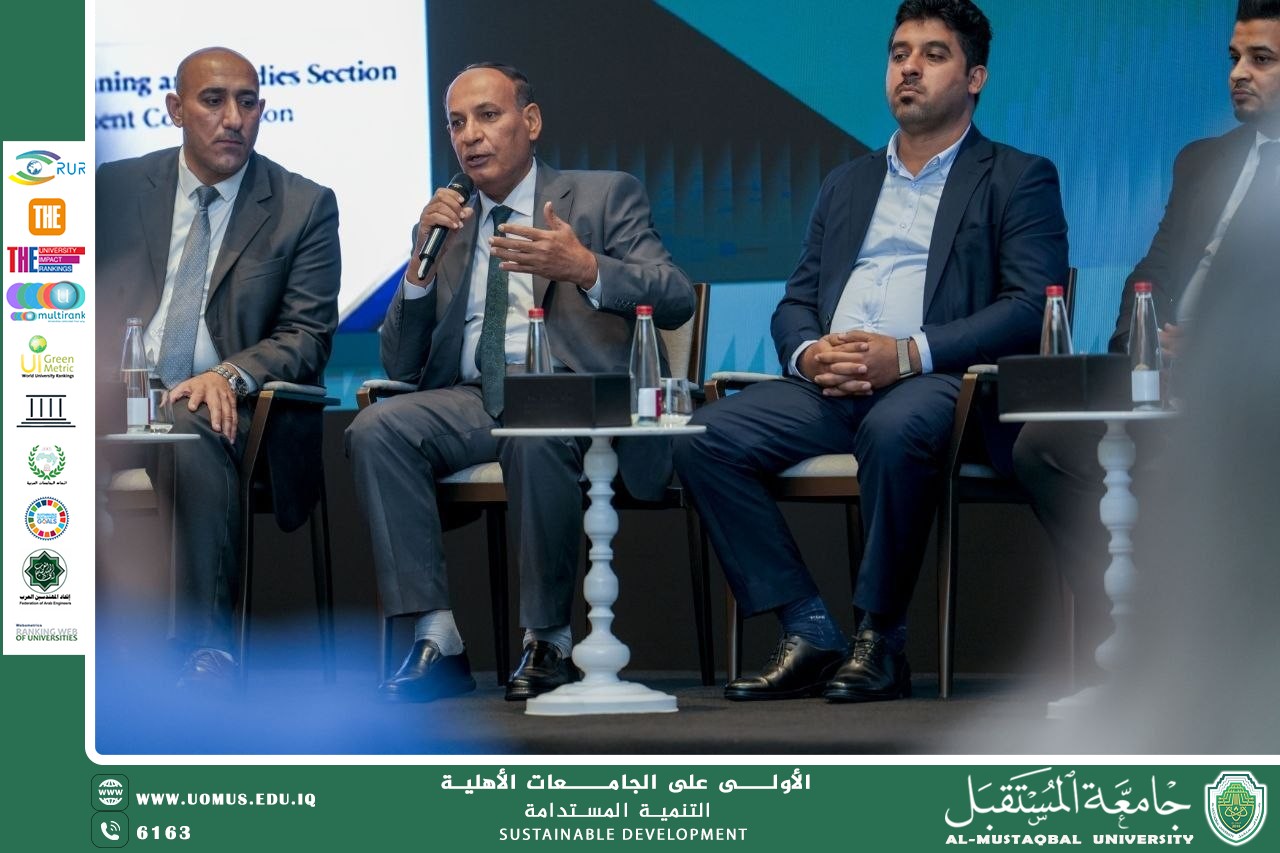
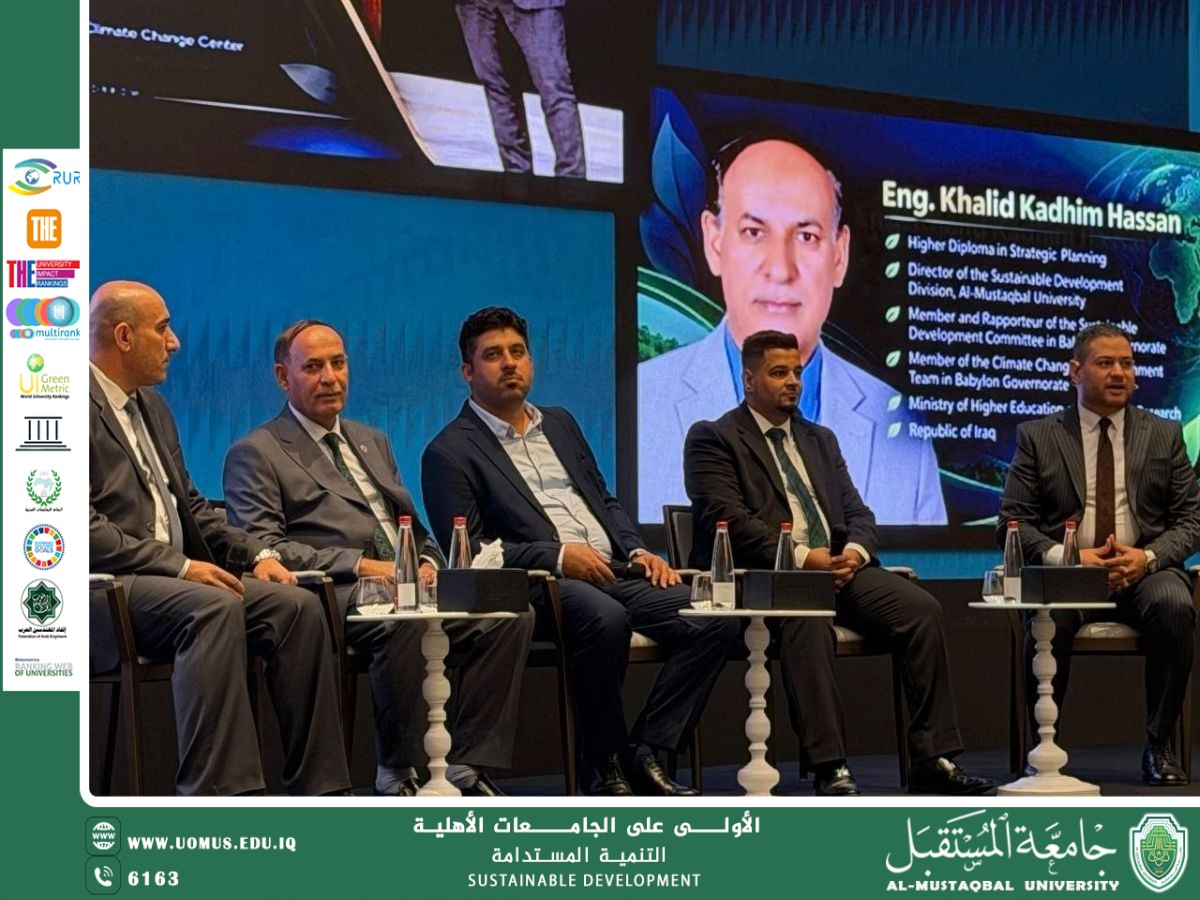
The University was represented by Eng. Khalid Kadhim Al-Salihi, Director of the Sustainable Development Division and a member of the team responsible for preparing the Local Nationally Determined Contributions Document and managing climate risks in Babil Governorate. During a panel discussion, he addressed the role of higher education and scientific research in tackling climate change. He presented Al-Mustaqbal University's experience in adapting to and mitigating the impacts of climate change through education, research, initiatives, and community engagement. He also highlighted the University's advanced positions in international sustainable university rankings as evidence of its performance and ongoing efforts in sustainability and climate action. The University's contributions received appreciation from the conference participants.
Al-Salihi also proposed a funded research project on climate change aimed at connecting higher education and scientific research outcomes with the needs of local communities in Babil and Dhi Qar. The proposed project seeks to translate academic knowledge into practical solutions that address local priorities, while supporting innovative ideas developed by the University's academic staff, employees, and students and transforming them into entrepreneurial projects through the Science and Technology Parks Department.
The proposed areas of work include the application of remote sensing technologies and the development of Geographic Information Systems (GIS), alongside transforming the University campus into a living laboratory for sustainability. This vision involves promoting clean energy, water conservation, afforestation, waste management, sustainable transport, emissions measurement, biodiversity conservation, and smart agriculture. He also emphasised the importance of strengthening cooperation among universities, local governments, and donor agencies to develop practical projects capable of securing national and international funding.
This participation contributes directly to several United Nations Sustainable Development Goals (SDGs), particularly SDG 13: Climate Action, through supporting local responses to climate change; SDG 4: Quality Education, by harnessing education and research to build capacities and generate practical knowledge; and SDG 17: Partnerships for the Goals, by strengthening cooperation among academic institutions, local governments, international organisations, and donor agencies. The proposed initiatives also support SDG 6: Clean Water and Sanitation, SDG 11: Sustainable Cities and Communities, and SDG 15: Life on Land, through water conservation, sustainable planning, and biodiversity protection.
This participation reflects the commitment of the President of Al-Mustaqbal University, Professor Dr Hassan Shaker Majdi, to strengthening the University's contribution to shaping local climate responses and expanding partnerships that transform strategies and plans into practical projects with positive impacts on people, the environment, and the economy. In this regard, the University reaffirms that the role of academic institutions extends beyond identifying challenges to developing scientific and practical solutions and measuring their real-world impact.