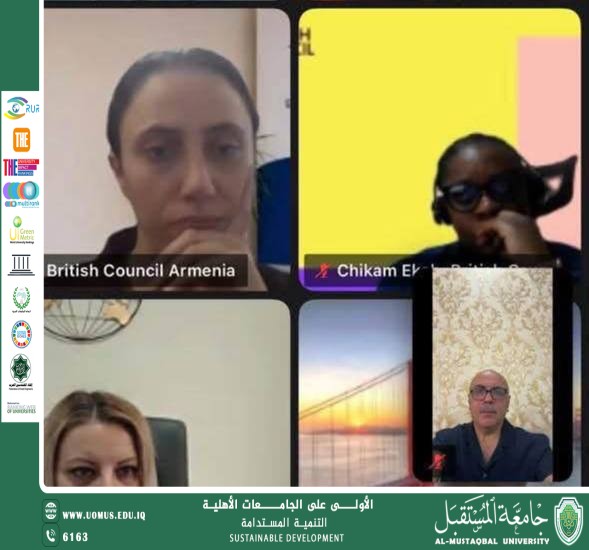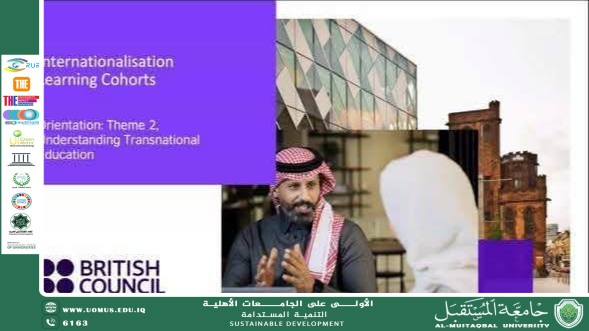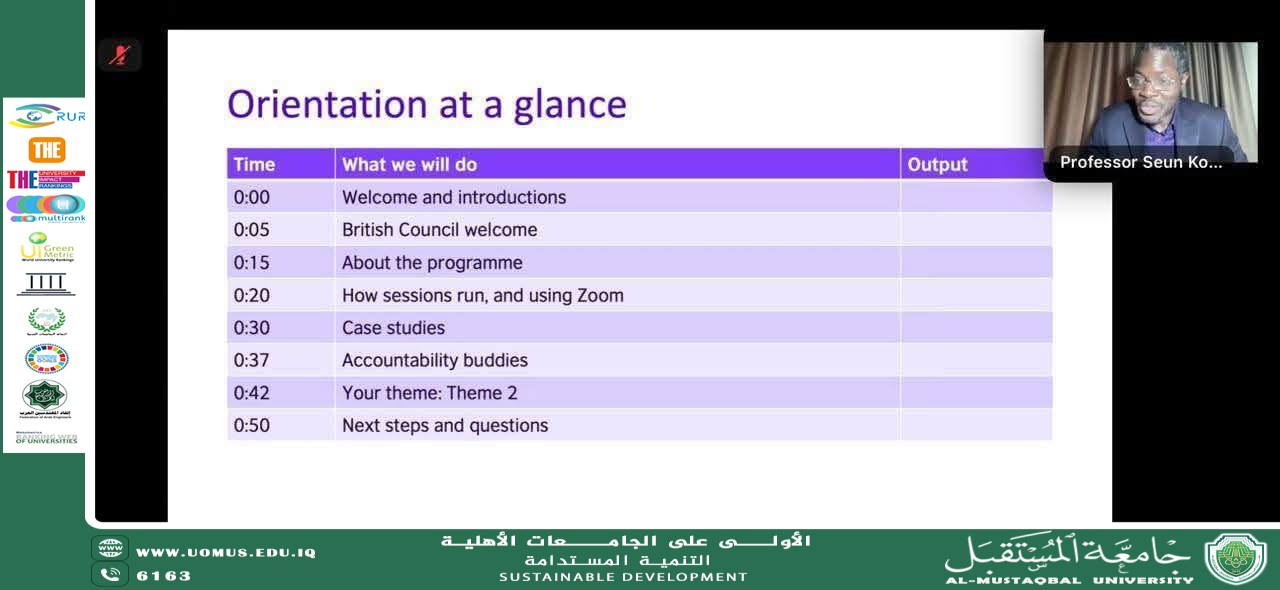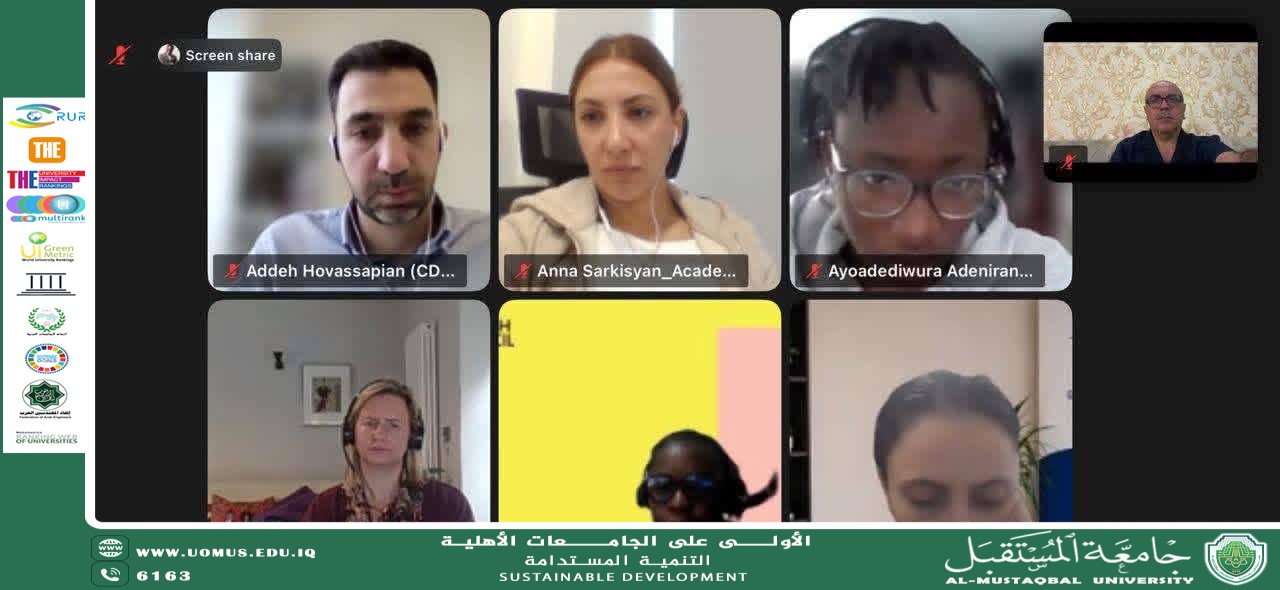
As part of its efforts to strengthen its international presence and expand academic cooperation with universities worldwide, Al-Mustaqbal University participated in the Orientation Session of the Internationalisation Learning Cohort (ILC), organized by the British Council under its Going Global Partnerships programme on Thursday, 29 October 2026. The University was represented by Assistant Professor Dr Amin Mohammed Kitab, Associate Dean for Scientific Affairs at the Technical Engineering College.
The participation formed part of the programme’s second theme, “Understanding Transnational Education (TNE),” which aims to deepen higher education institutions’ understanding of transnational education concepts and models, while exploring the opportunities and challenges associated with developing international educational partnerships and expanding cooperation among higher education institutions.
The programme includes a series of training and interactive sessions addressing the delivery of academic programmes in collaboration with international institutions, face-to-face and online education models, curriculum development in line with local and international requirements, quality assurance, and the enhancement of academic and institutional capacities. It also provides opportunities for participants from different institutions and countries to exchange experiences and expertise.
The programme is expected to help participants identify internationalisation priorities within their institutions, assess institutional capacities for developing international cooperation, and establish practical steps to sustain academic partnerships. It will also enhance opportunities for engagement with British universities and the exploration of future areas of collaboration.
Al-Mustaqbal University’s participation reflects its commitment to keeping pace with contemporary trends in higher education internationalisation, engaging with international experiences, and developing strategic partnerships that contribute to improving the quality of education and research, strengthening academic capacities, and expanding opportunities for cooperation and knowledge exchange with universities and educational institutions worldwide.
This participation supports the Sustainable Development Goals, particularly SDG 4: Quality Education and SDG 17: Partnerships for the Goals.