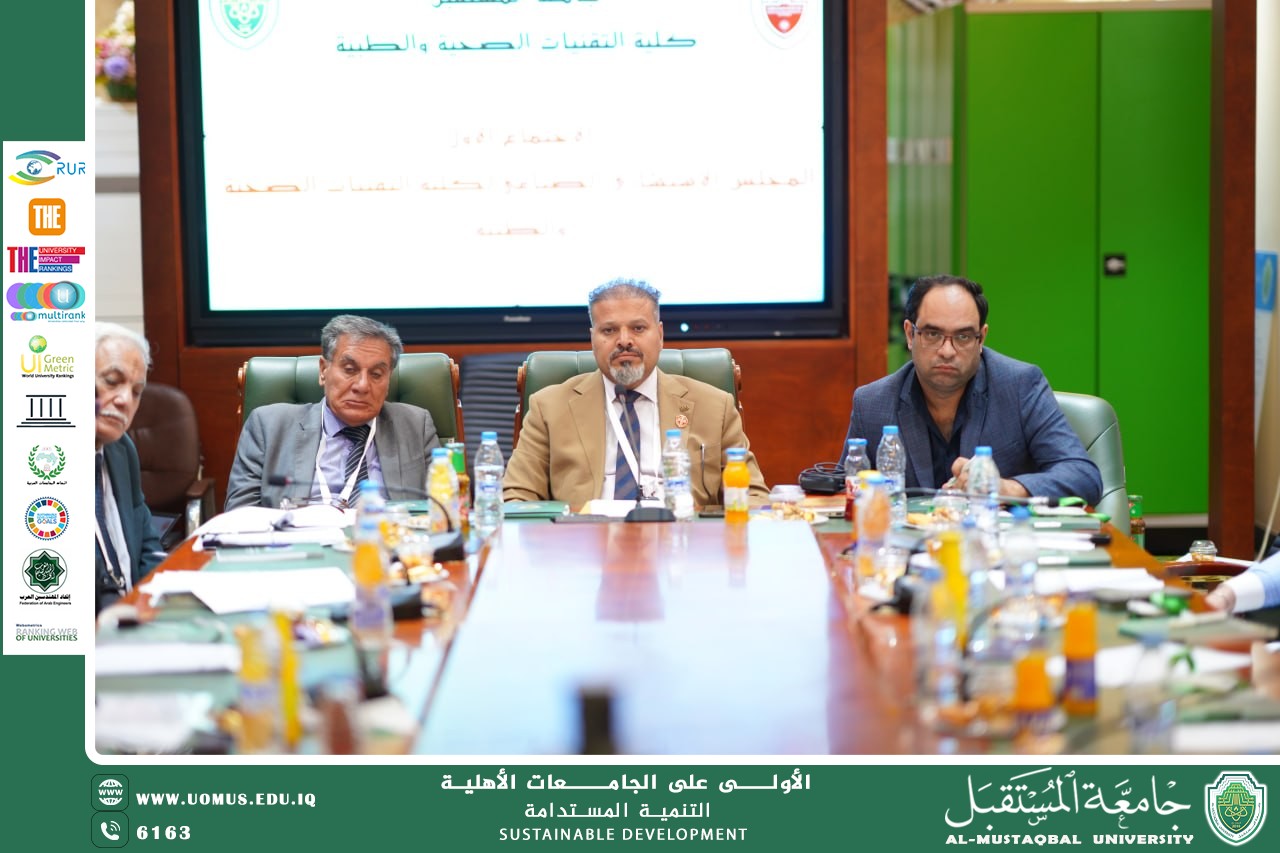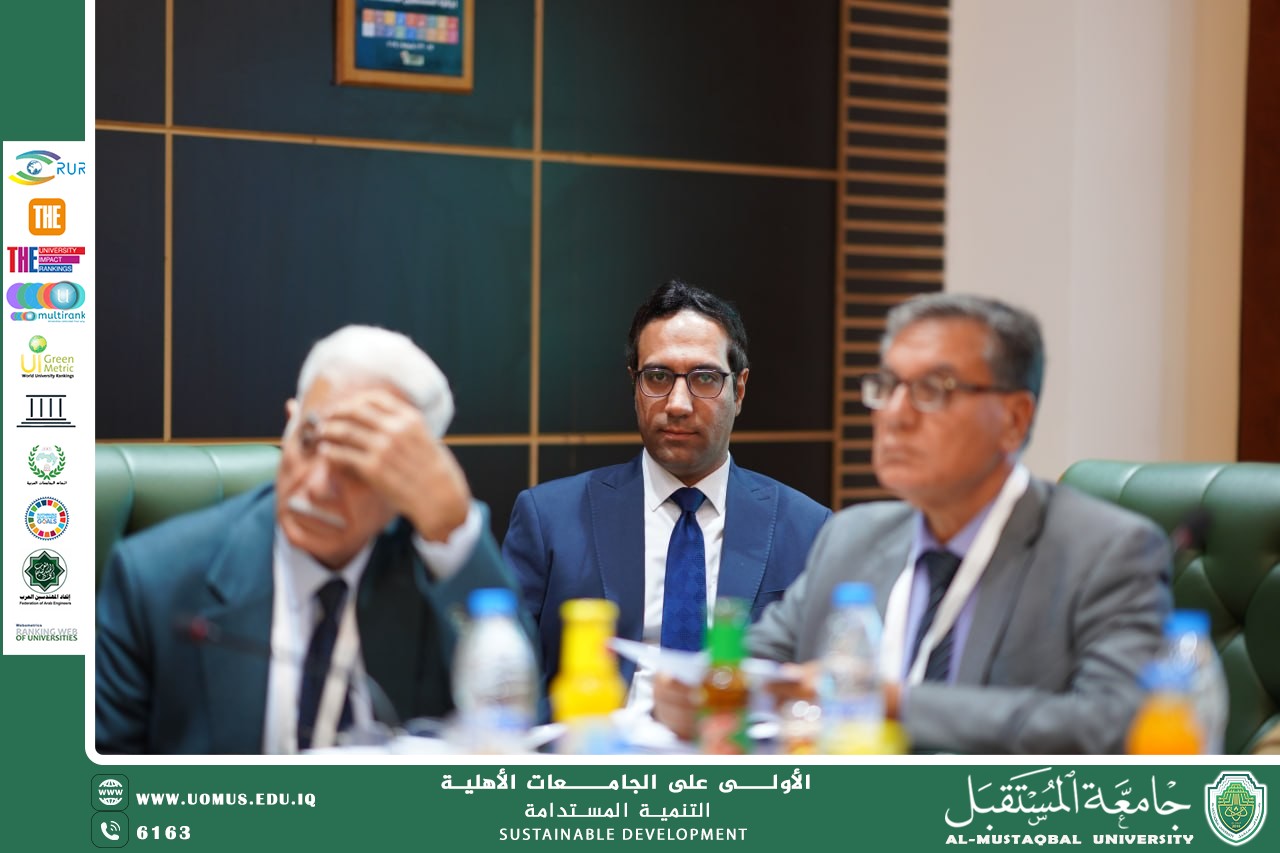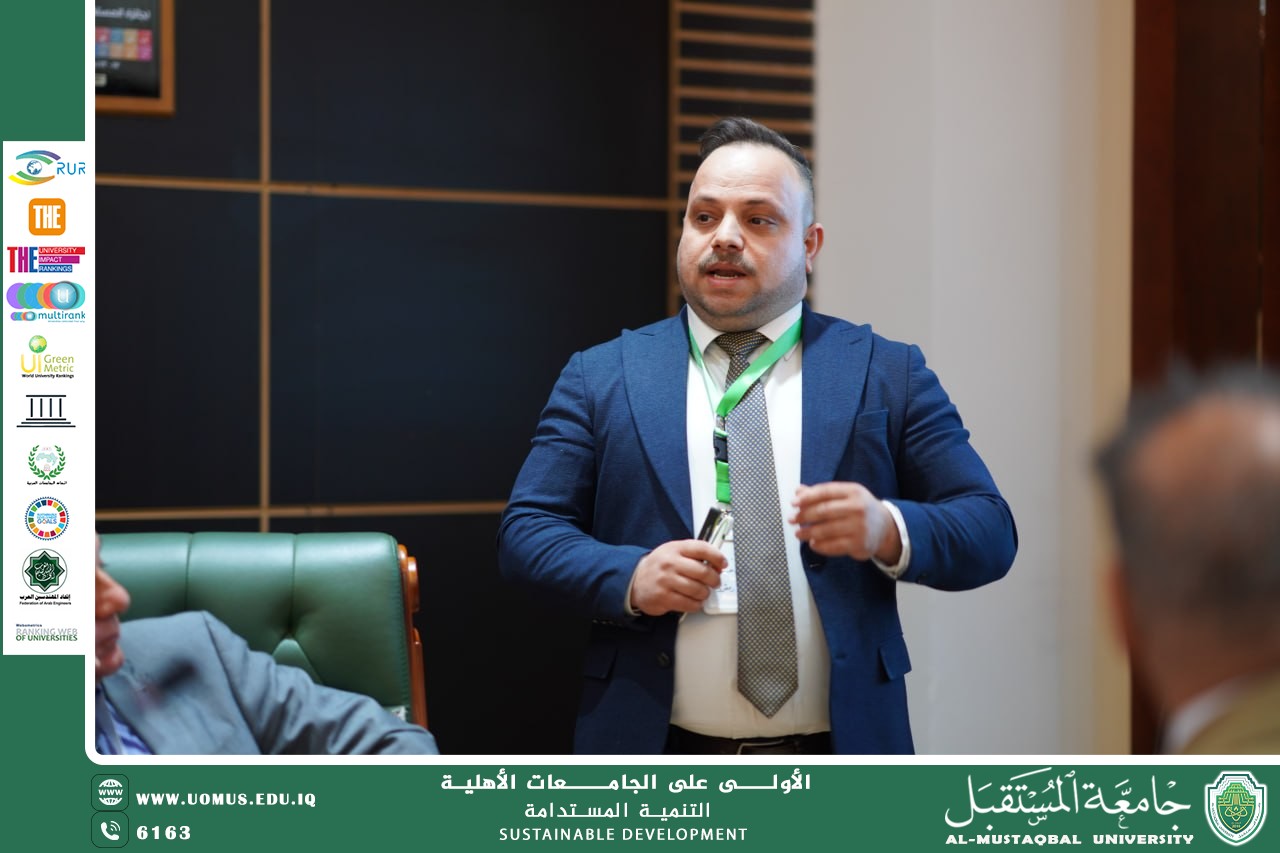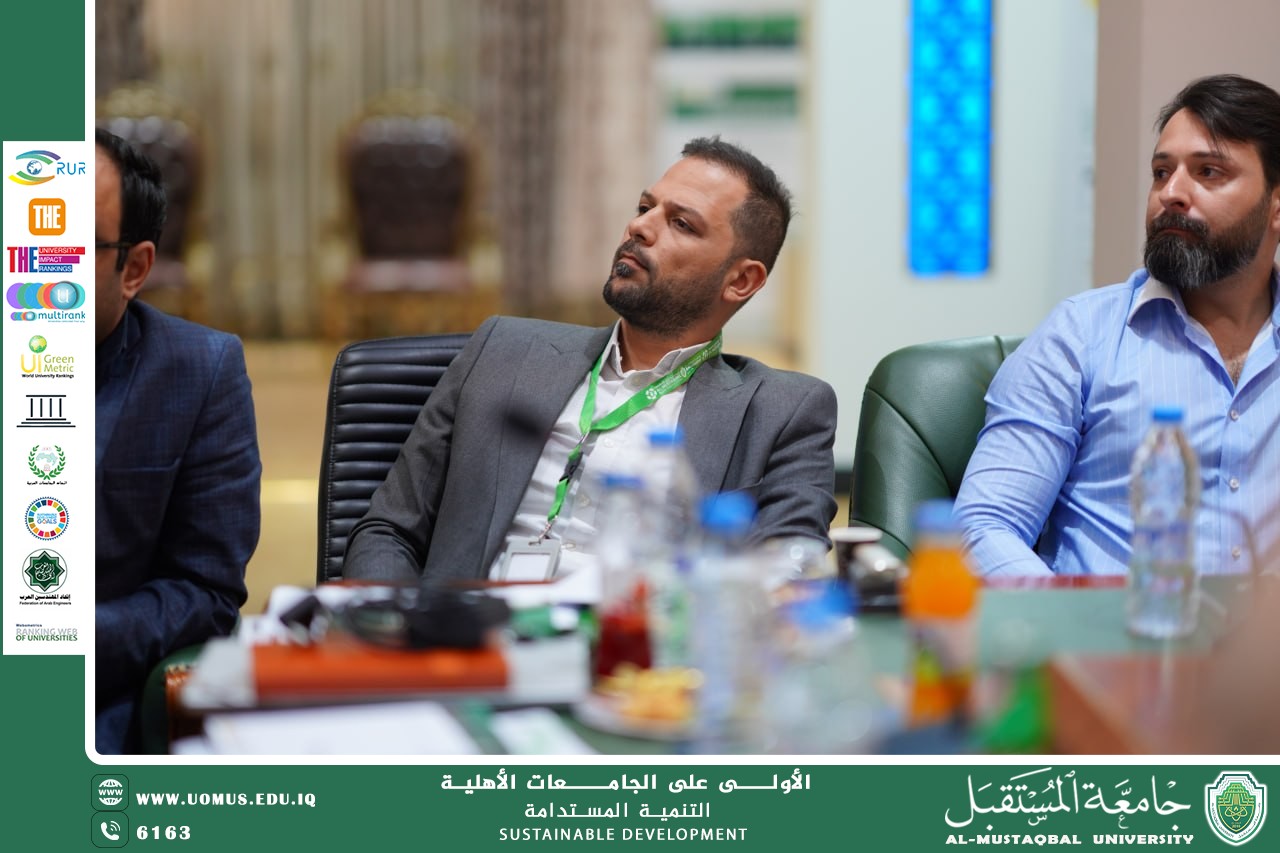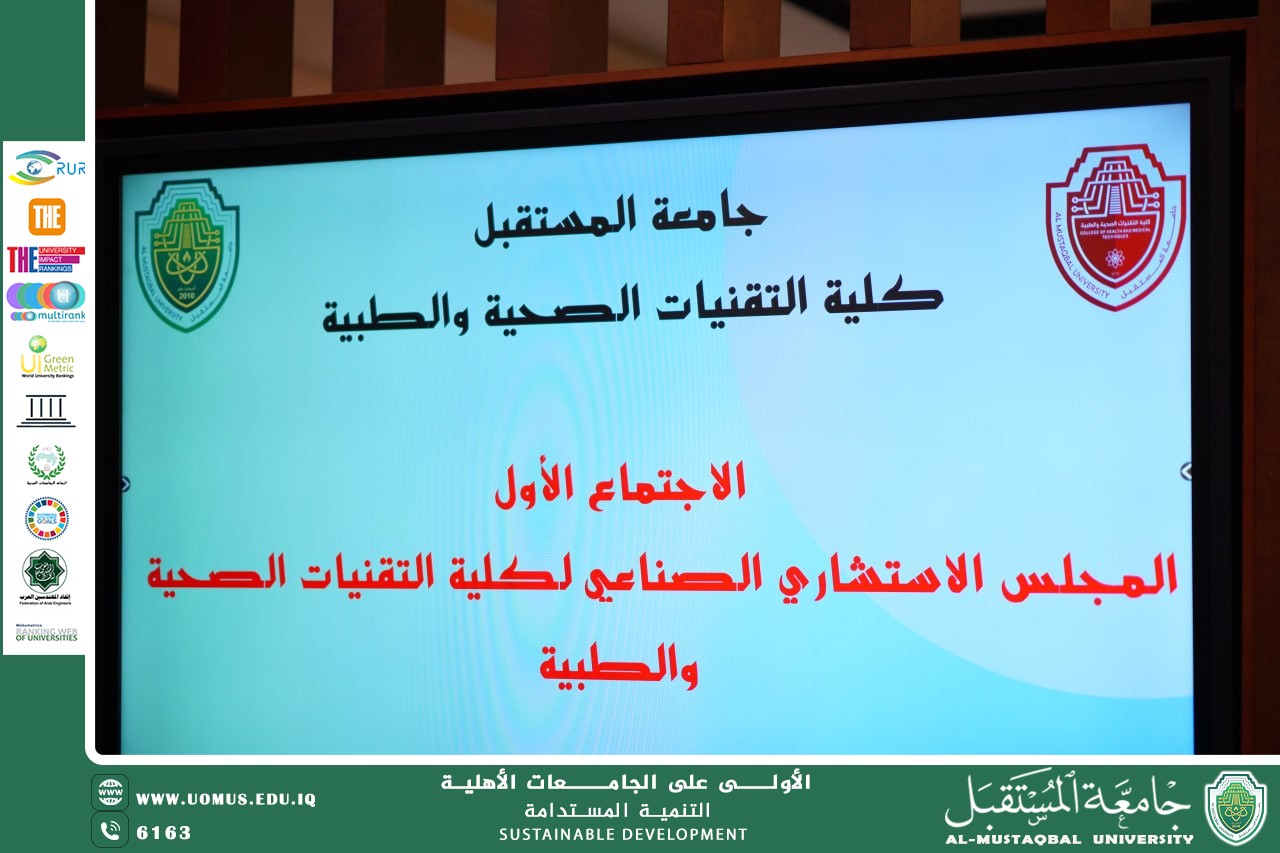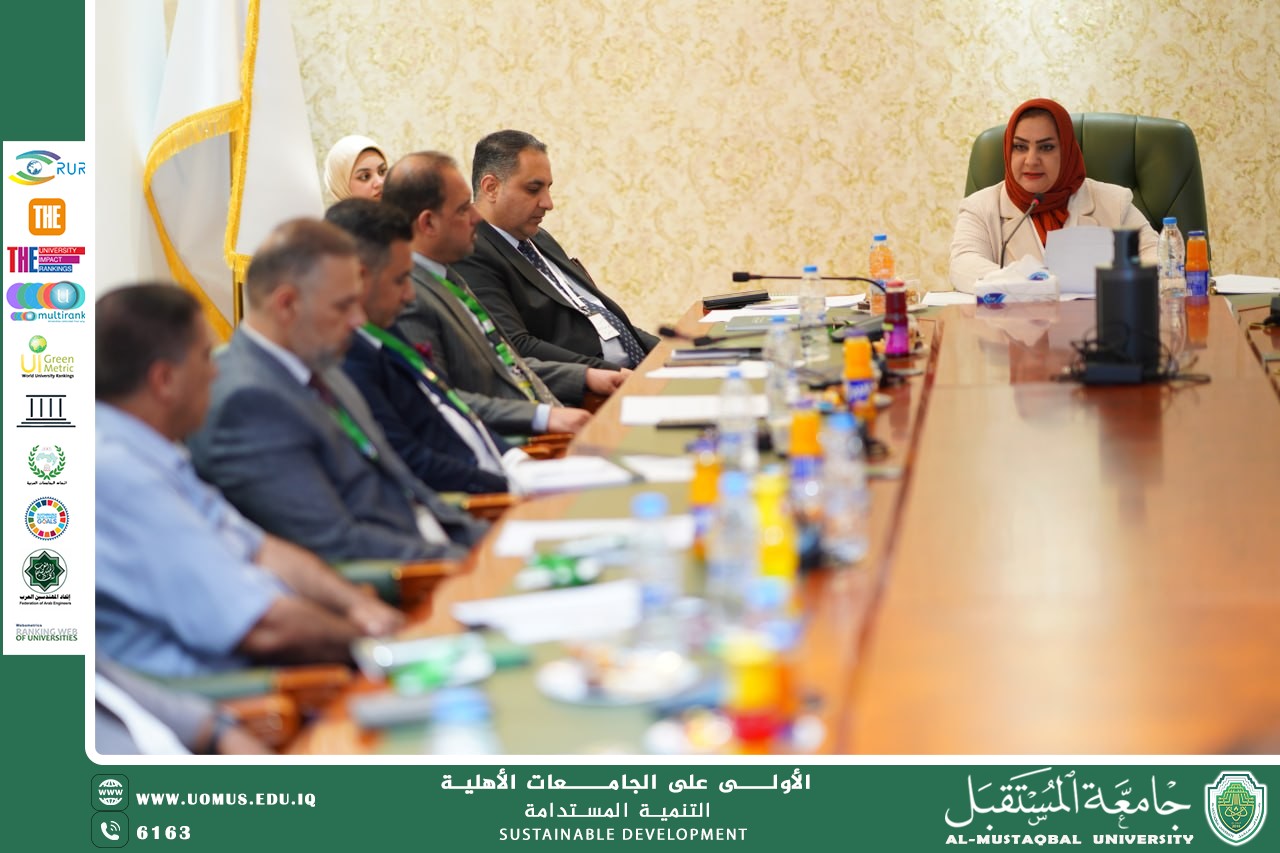
Under the patronage of the President of Al-Mustaqbal University, Professor Dr. Hassan Shaker Majdi, and in accordance with the directives of the Ministry of Higher Education and Scientific Research and the University Presidency regarding the importance of strengthening industrial advisory boards in colleges and institutes, the College of Health and Medical Technologies at Al-Mustaqbal University held an important meeting of its Industrial Advisory Board on Sunday, 26/4/2026, aimed at enhancing partnership with the labor and production sectors and aligning educational outcomes with labor market requirements.
The meeting was attended by the Dean of the College, Dr. Zahraa Halim Al-Qaim, the Scientific Assistant, Dr. Ahmed Al-Khafaji, heads of academic departments, as well as representatives from the health and industrial sectors. Participants included the Administrative Assistant of the Babylon Health Directorate, several hospital directors from Babylon and Najaf governorates, representatives of medical equipment companies, and officials from major private pharmaceutical warehouses.
The meeting focused on several key areas, including the development of academic curricula in line with recent advancements in health and laboratory technologies, enhancing students’ practical and applied skills to improve their professional competencies, aligning educational outcomes with labor market needs to ensure graduate employability, and expanding cooperation with the industrial sector in training, qualification, and knowledge exchange.
Participants emphasized the importance of sustaining effective communication between the college and relevant stakeholders in order to achieve integration between theoretical and practical aspects, and to prepare graduates equipped with the necessary skills to keep pace with scientific and technological developments, thereby improving their employment opportunities and supporting sustainable healthcare development.
This meeting aligns with the United Nations Sustainable Development Goals (SDGs), particularly SDG 4 (Quality Education), SDG 8 (Decent Work and Economic Growth), and SDG 9 (Industry, Innovation and Infrastructure), through enhancing applied education, strengthening partnerships with the industrial sector, and improving graduate readiness for the labor market.