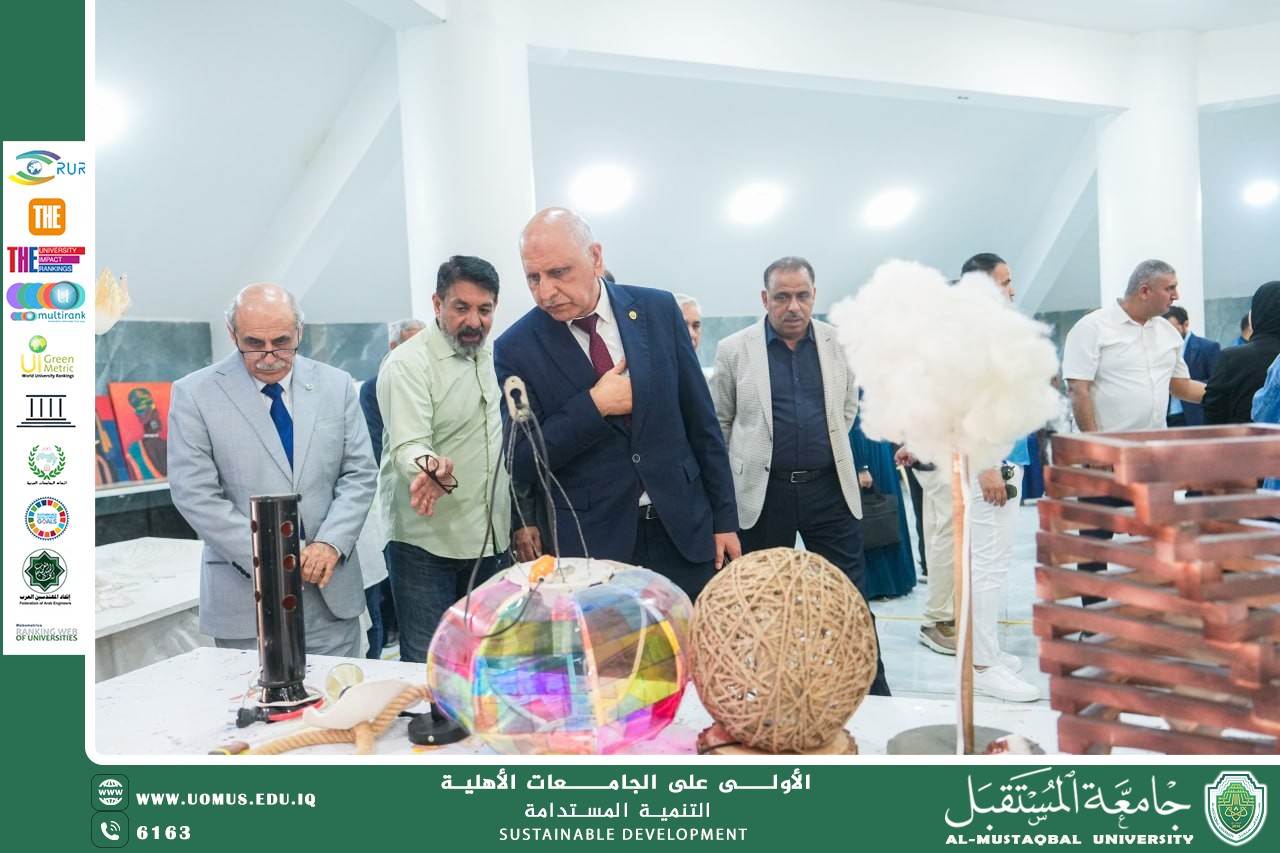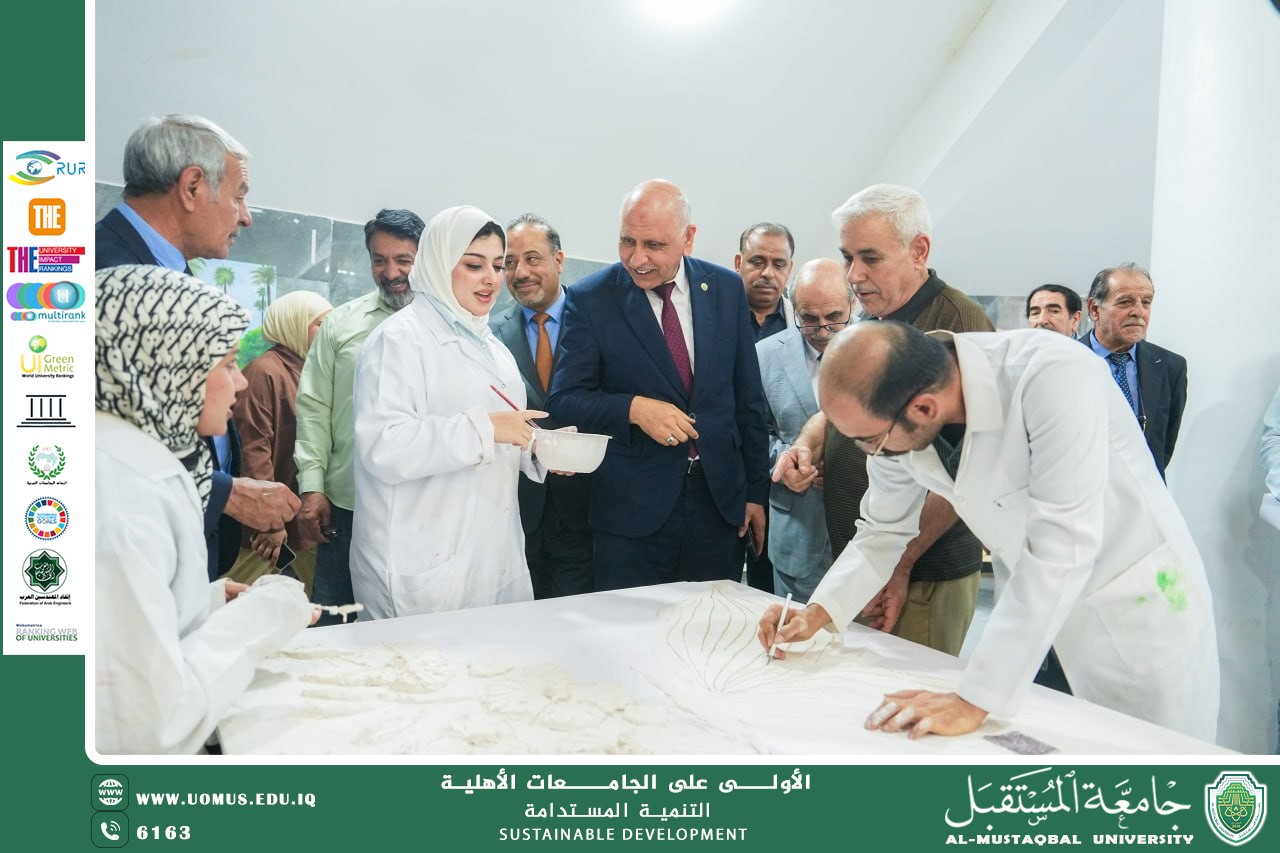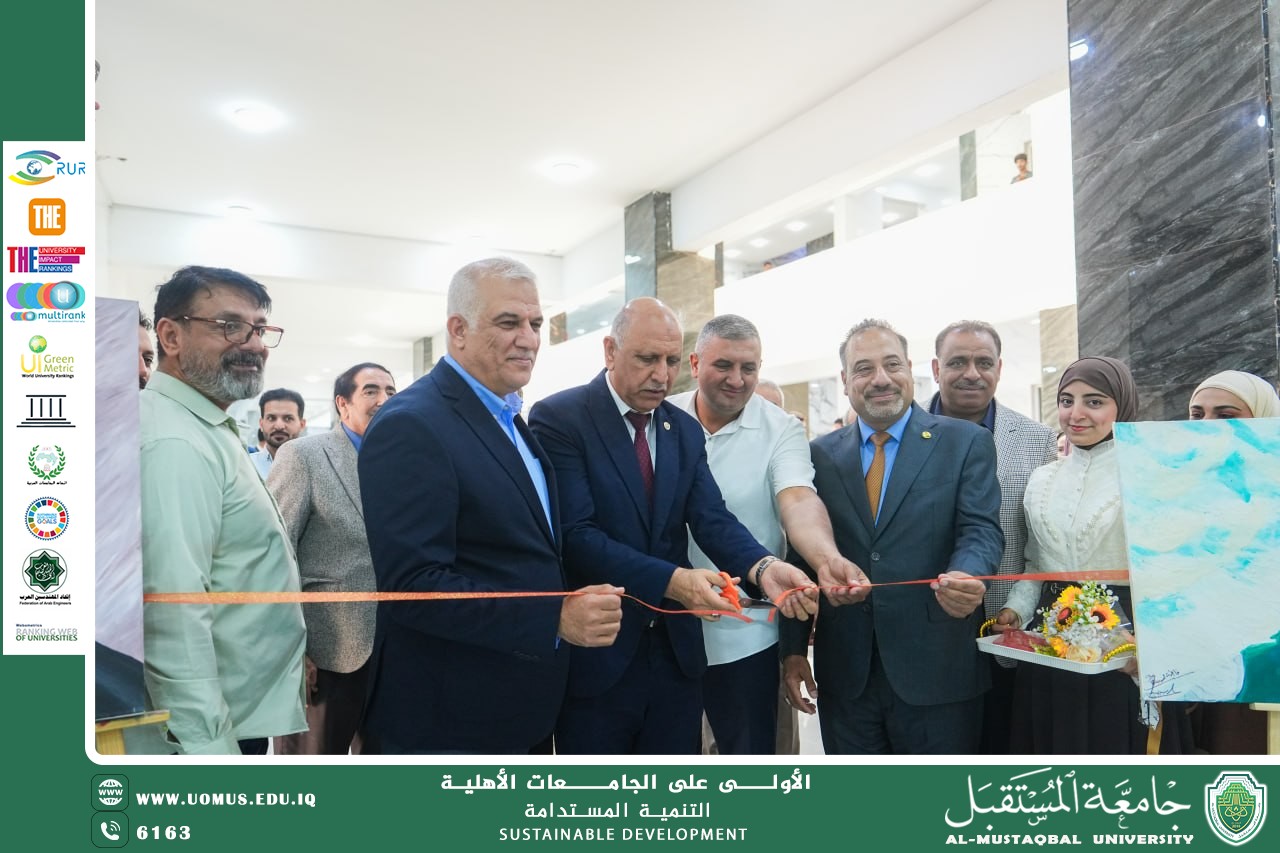
Under the patronage of the President of Al-Mustaqbal University, Professor Dr. Hassan Shaker Majdi , and within the university’s commitment to promoting sustainability concepts and strengthening environmental awareness in the academic environment, the College of Fine Arts at Al-Mustaqbal University organized the opening of its art exhibition titled “Innovative Spaces” on Tuesday, 21/4/2026. The event was held as part of the university’s activities aimed at supporting creativity aligned with the Sustainable Development Goals (SDGs).
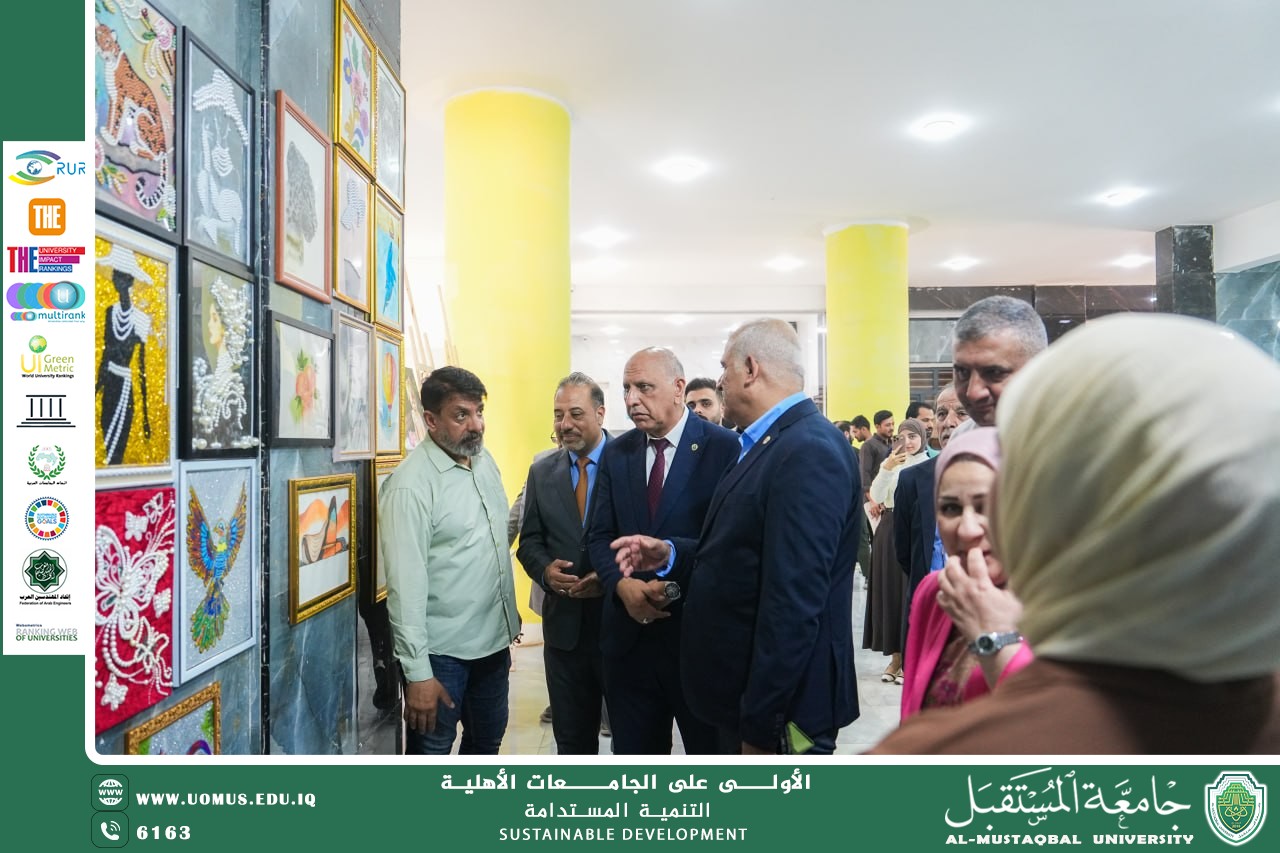
The exhibition presented a contemporary vision that integrates artistic creativity with environmental awareness through student artworks that reflected a significant development in sustainable design thinking. The students showcased innovative artistic works based on principles of recycling and responsible material use.
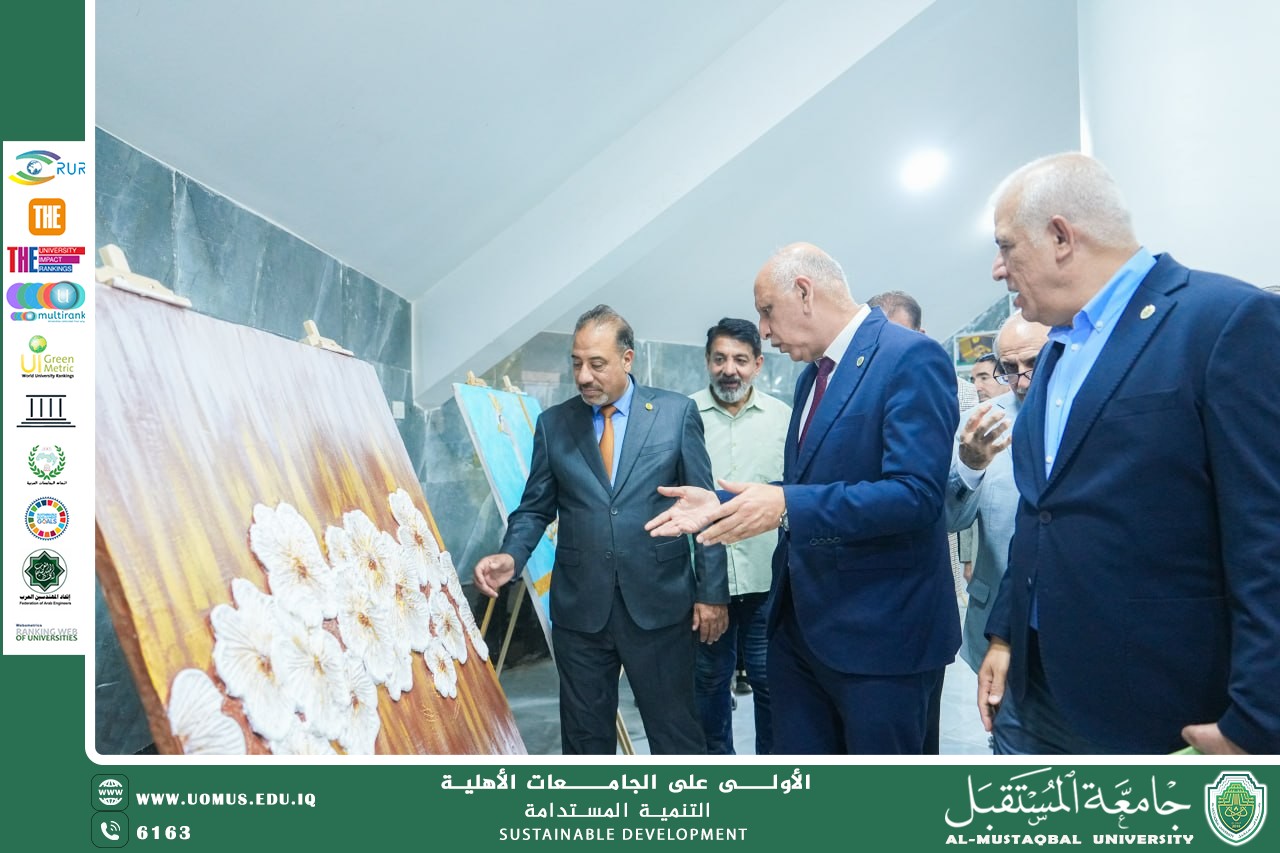
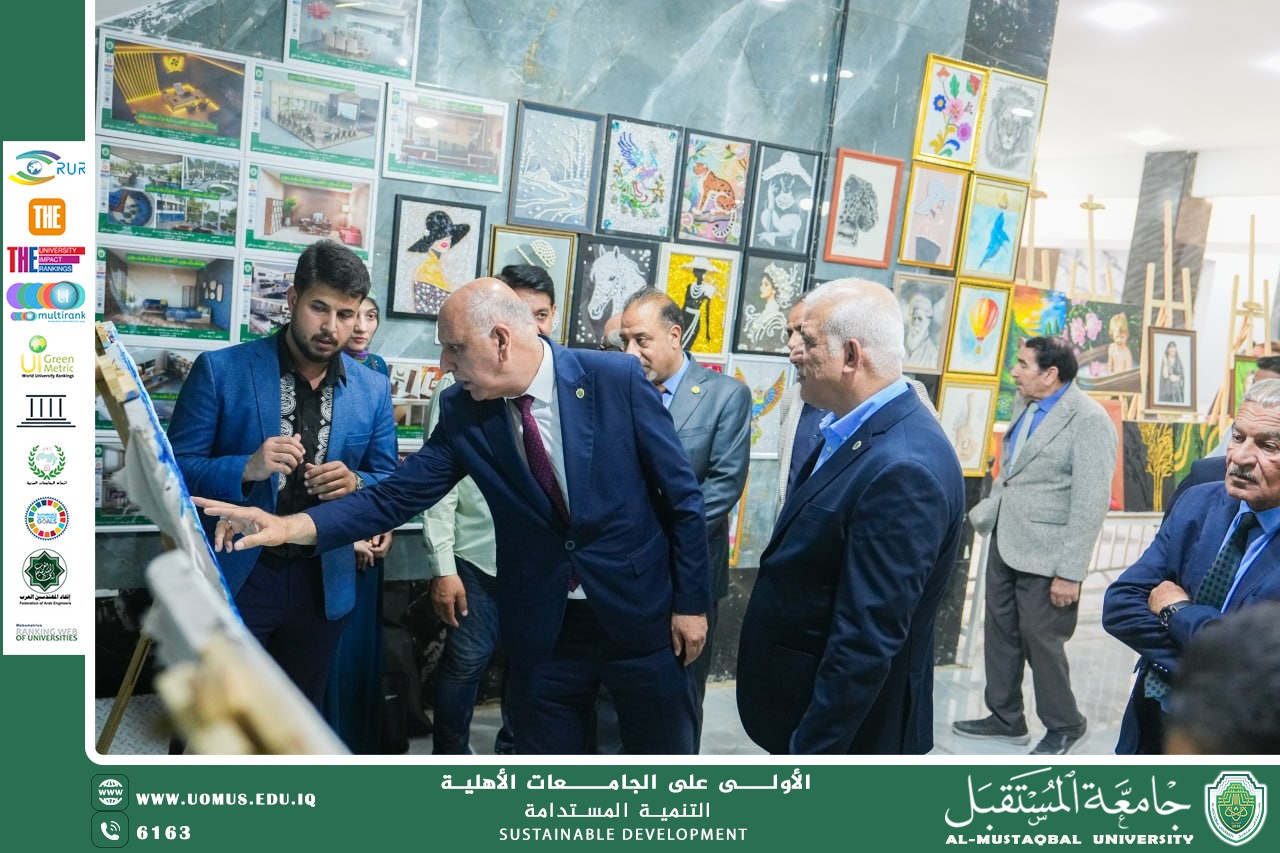
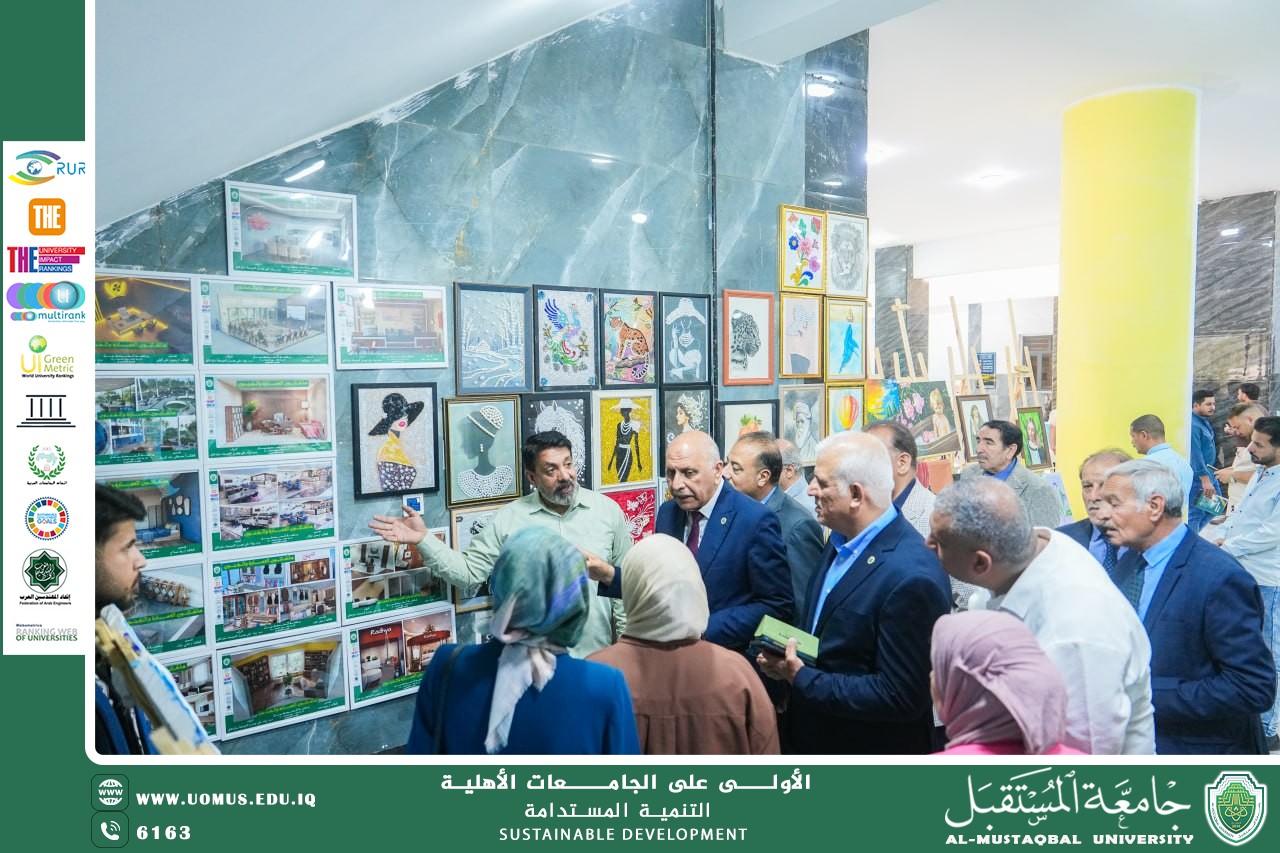
The exhibition was inaugurated in the presence of the Assistant President of the University for Administrative Affairs, Professor Dr. Muntadhar Fadil, representing the President of Al-Mustaqbal University, Professor Dr. Hassan Shaker Majdi, along with the Director of Scientific and Academic Supervision, Professor Dr. Muthaffar Sadiq Al-Zuheiri, and the Dean of the College of Fine Arts, Professor Dr. Mazen Hadi. A number of faculty members, staff, and students also attended the event in an academic celebratory atmosphere that emphasized the importance of supporting environmentally oriented creative initiatives.
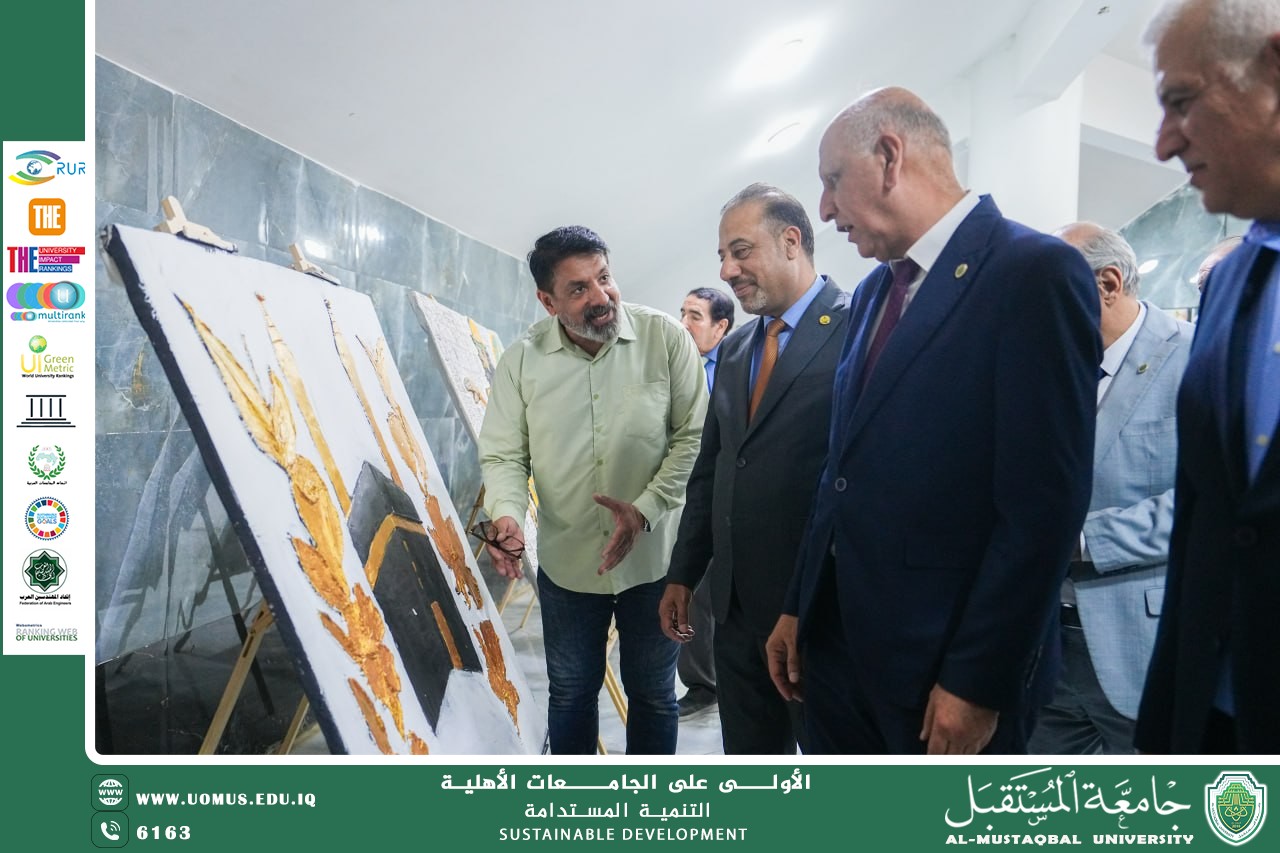
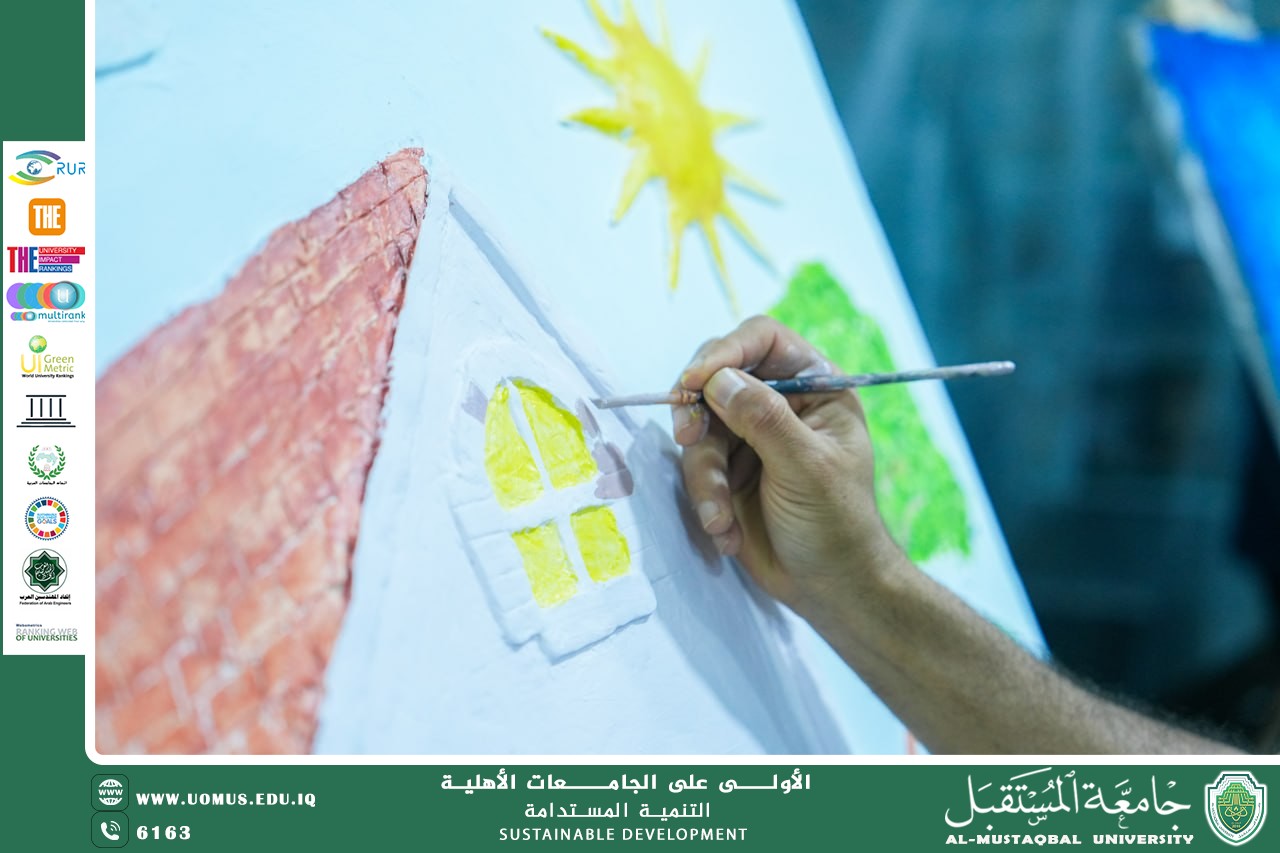
The exhibition relied on the use of sustainable materials in producing innovative artworks through the Bas-Relief technique, enabling students to express their ideas in a way that combines simplicity and depth while ensuring efficient resource utilization. The materials used included recycled plaster, natural wood, clay, as well as industrial waste that was reprocessed into artistic works carrying both aesthetic value and environmental messages.
Artistically, the works demonstrated an advanced understanding of the relationship between mass and space, with clear attention to balance, composition, and levels of relief, reflecting a high level of technical maturity. The use of natural colors and eco-friendly pigments further enhanced visual harmony and reinforced the concept of sustainability in artistic practice.
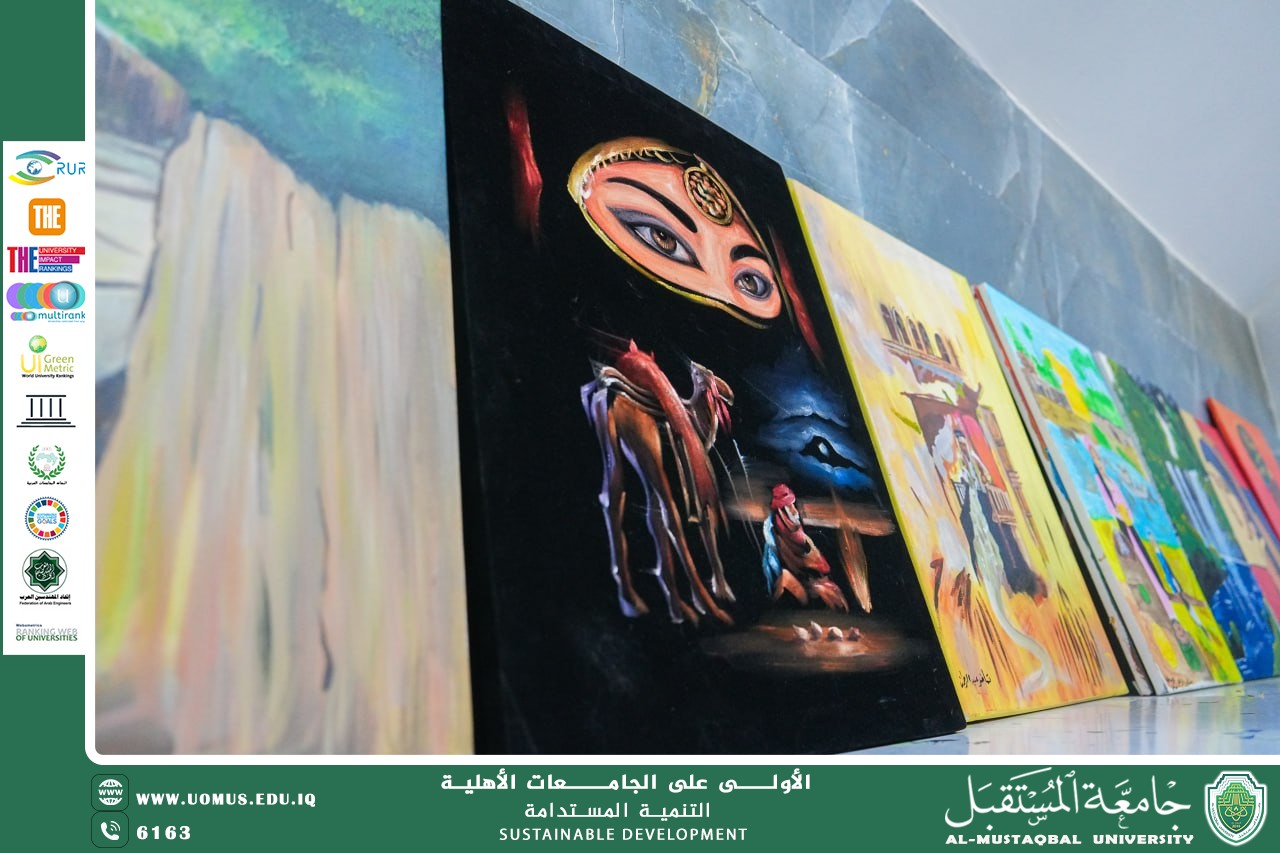
The exhibited works varied between decorative pieces, drawings, and professional sketches, offering a rich visual experience that reflects students’ spirit of innovation and experimentation. The exhibition also served as an educational and practical platform that promotes recycling culture and strengthens responsible design awareness.
This initiative aligns with the United Nations Sustainable Development Goals, particularly SDG 4 (Quality Education), SDG 12 (Responsible Consumption and Production), and SDG 13 (Climate Action), by integrating sustainability concepts into art education and preparing a generation of designers capable of balancing creativity with environmental and social responsibility.